

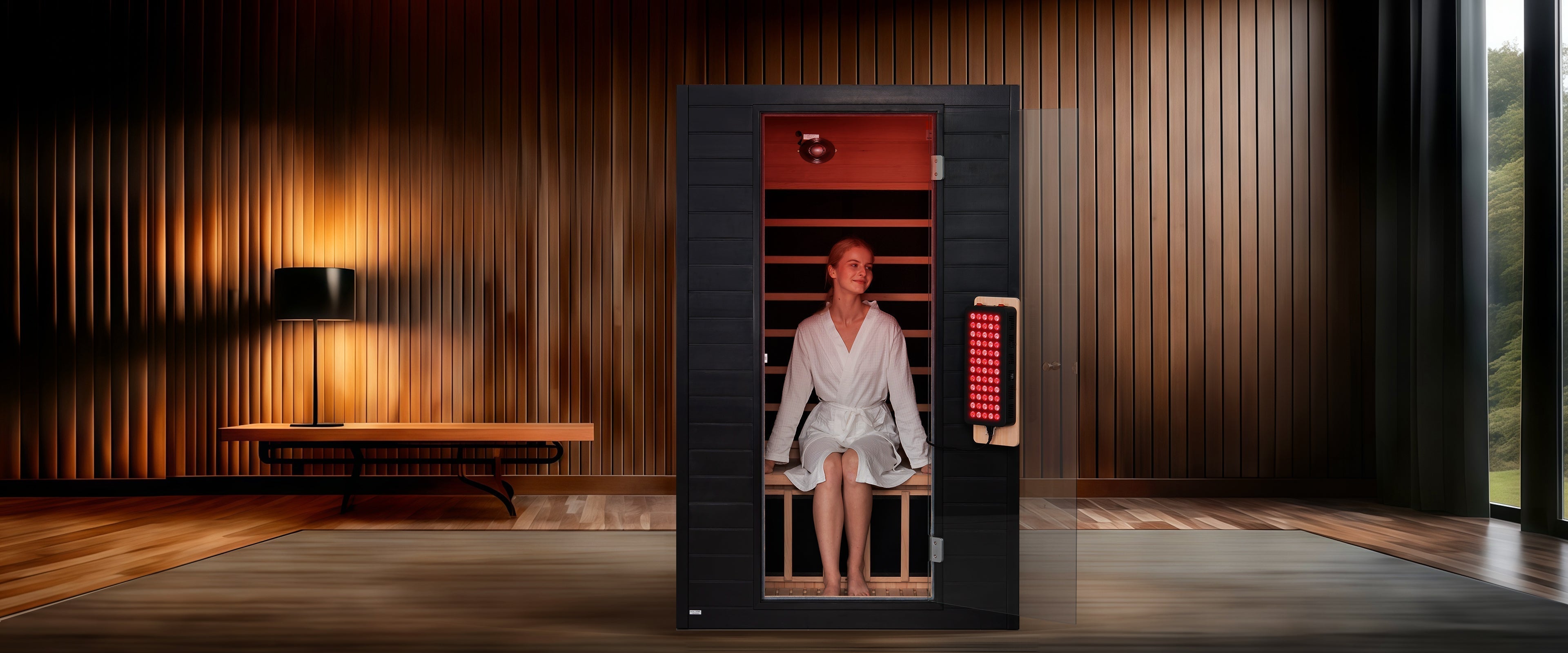
Red light therapy has been growing in popularity, and you’ve probably noticed that many devices, including red light therapy saunas, emphasize 660nm and 850nm wavelengths. If you’ve ever wondered why those two are so common, it’s all about how light interacts with your body at different depths and tissues.
660nm: The Surface-Level Superstar
The 660nm wavelength is in the visible red light range. It doesn’t penetrate super deep, but that’s actually a good thing for certain therapies.
-
Penetration: About 5–10 millimeters, targeting the skin and just below.
-
Primary benefits: Boosts collagen production, improves skin tone, and supports wound healing.
-
How it works in a sauna: In a red light therapy sauna, 660nm light reaches the skin and stimulates the mitochondria in your cells. These mitochondria use the light to make ATP, which is basically your cells’ energy currency. More energy means faster repair, smoother skin, and reduced inflammation at the surface.
If your goal is skin rejuvenation, reducing fine lines, or minor scar treatment, 660nm is where you want to focus.

850nm: The Deep-Tissue Helper
While 660nm works on the surface, 850nm is a near-infrared wavelength, which can sneak deeper into the body.
-
Penetration: Around 20–40 millimeters, reaching muscles, joints, and connective tissue.
-
Primary benefits: Helps reduce deep inflammation, promotes muscle recovery, and supports joint health.
-
How it works in a sauna: The infrared portion warms the tissue, improves blood flow, and encourages repair in muscles and ligaments. It’s perfect for targeting soreness, stiffness, or chronic inflammation.
Basically, 850nm complements 660nm by going deeper than the skin—so your sauna session can address both cosmetic and functional wellness.
How 660nm and 850nm Work Together
Red light therapy saunas often combine both wavelengths because they target different layers of tissue.
-
660nm: Surface-level benefits, perfect for skin and superficial blood circulation.
-
850nm: Deeper penetration for muscles, joints, and inflammation relief.
-
Together: You get a multi-layered therapy, from skin rejuvenation to muscle relaxation, all in one session.
This combination is why most modern red light therapy saunas, including models with ALJ 300 LED panels, include both wavelengths for maximum versatility.
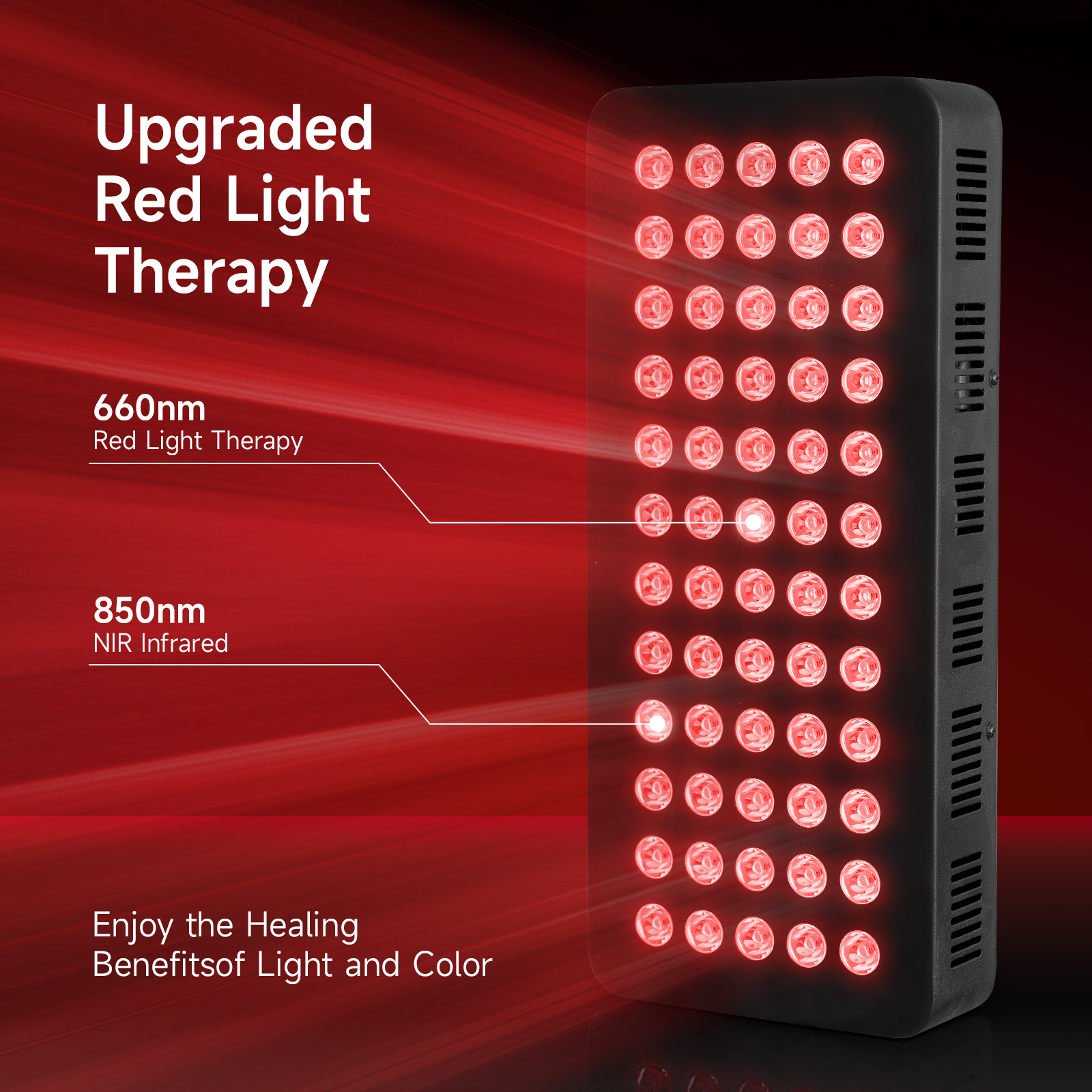
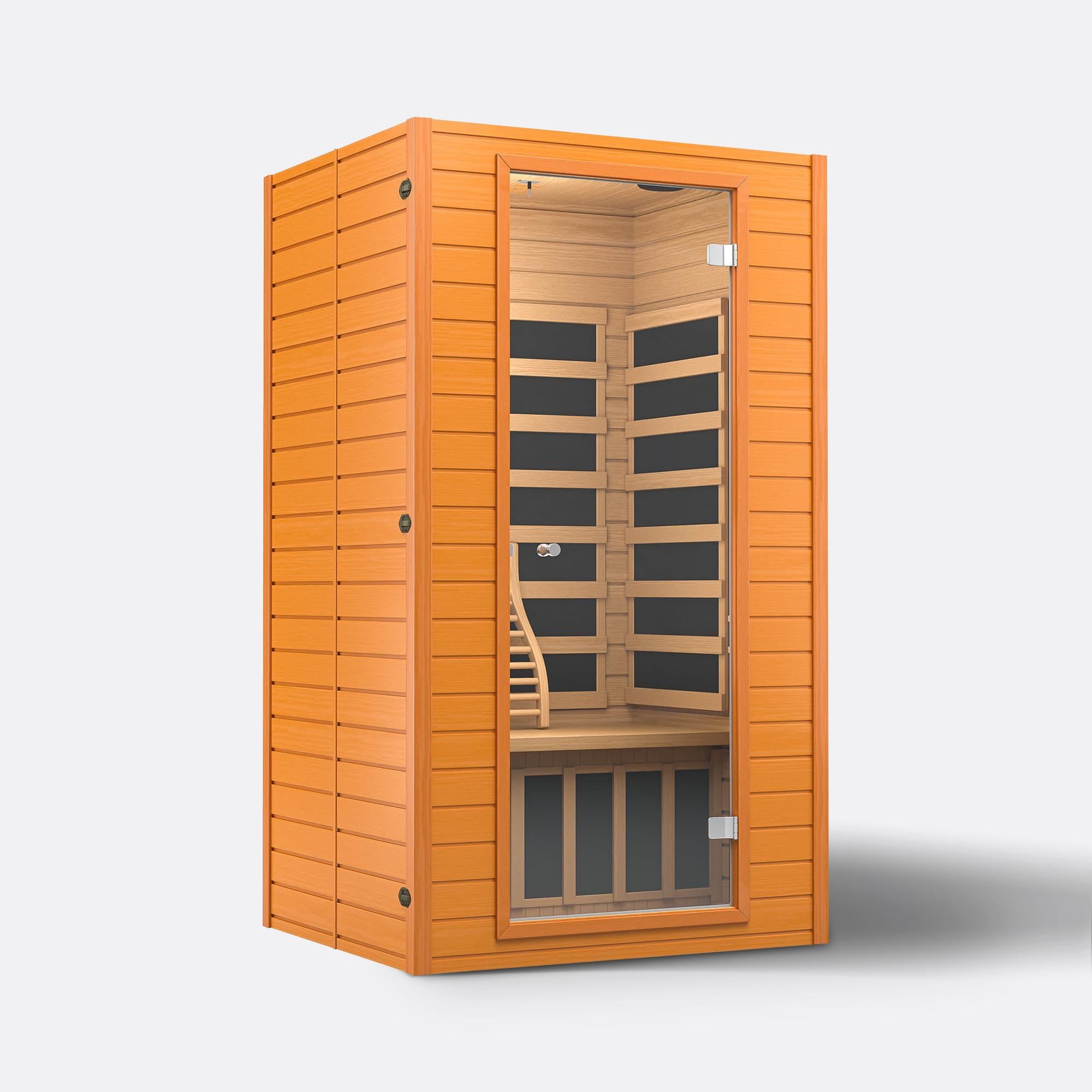
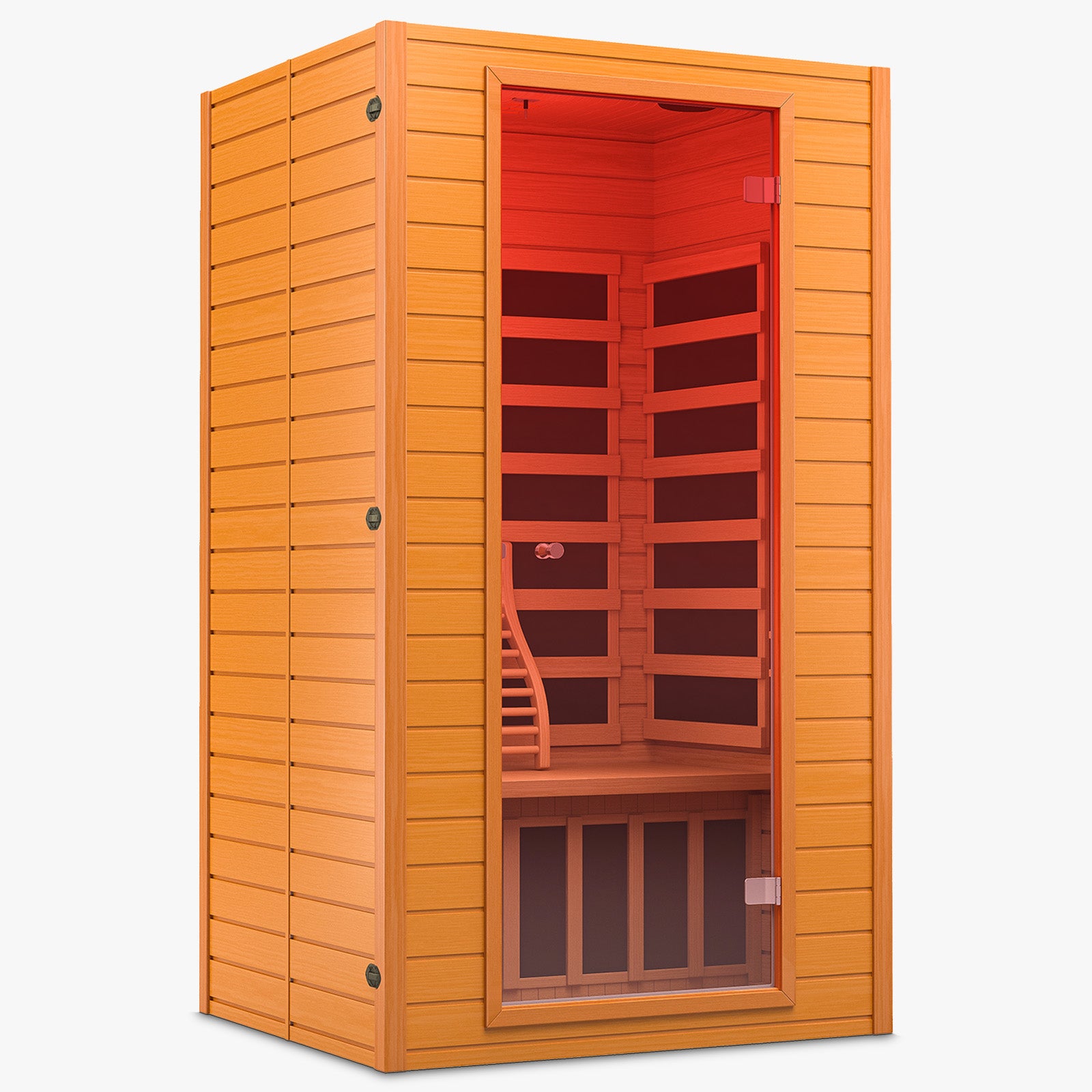
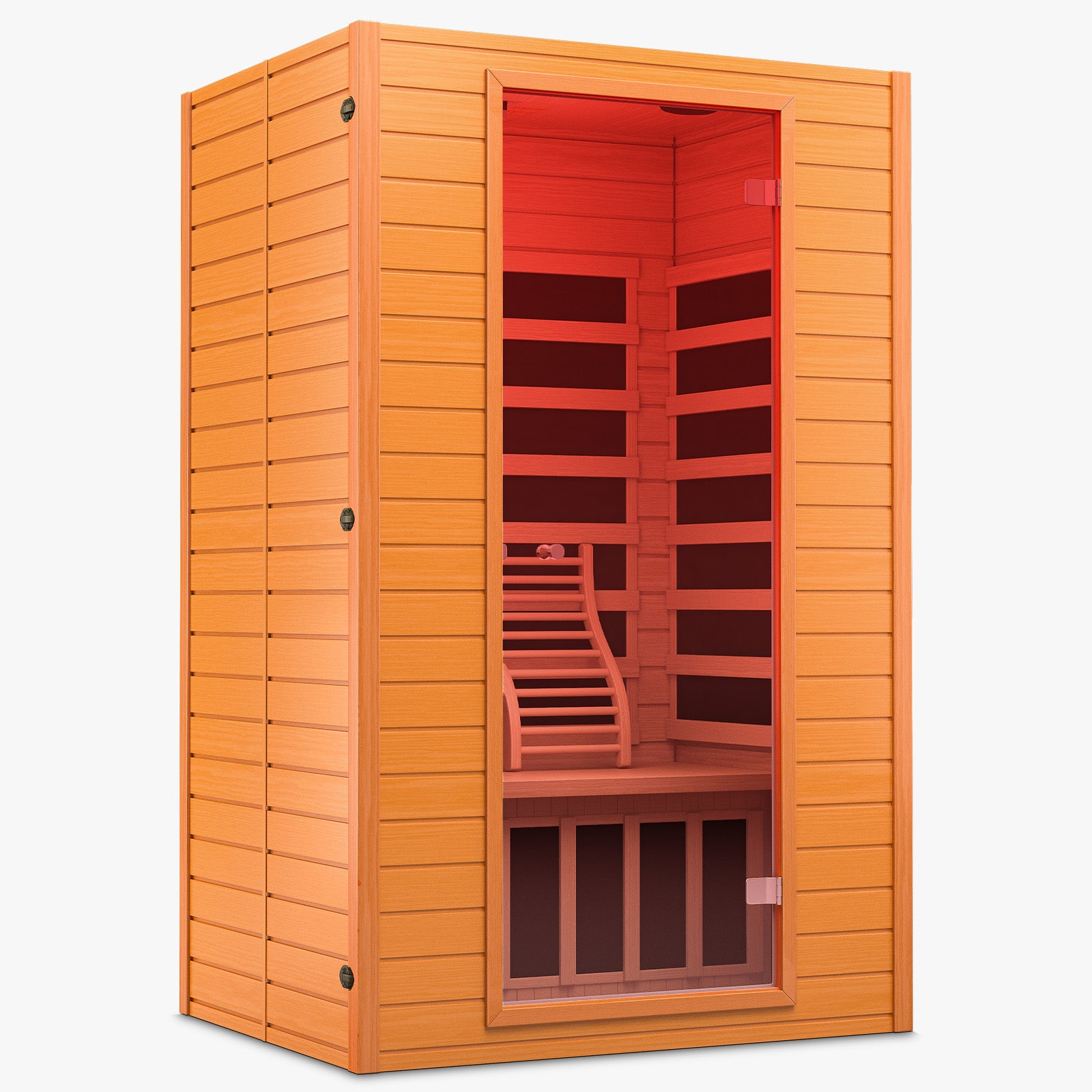
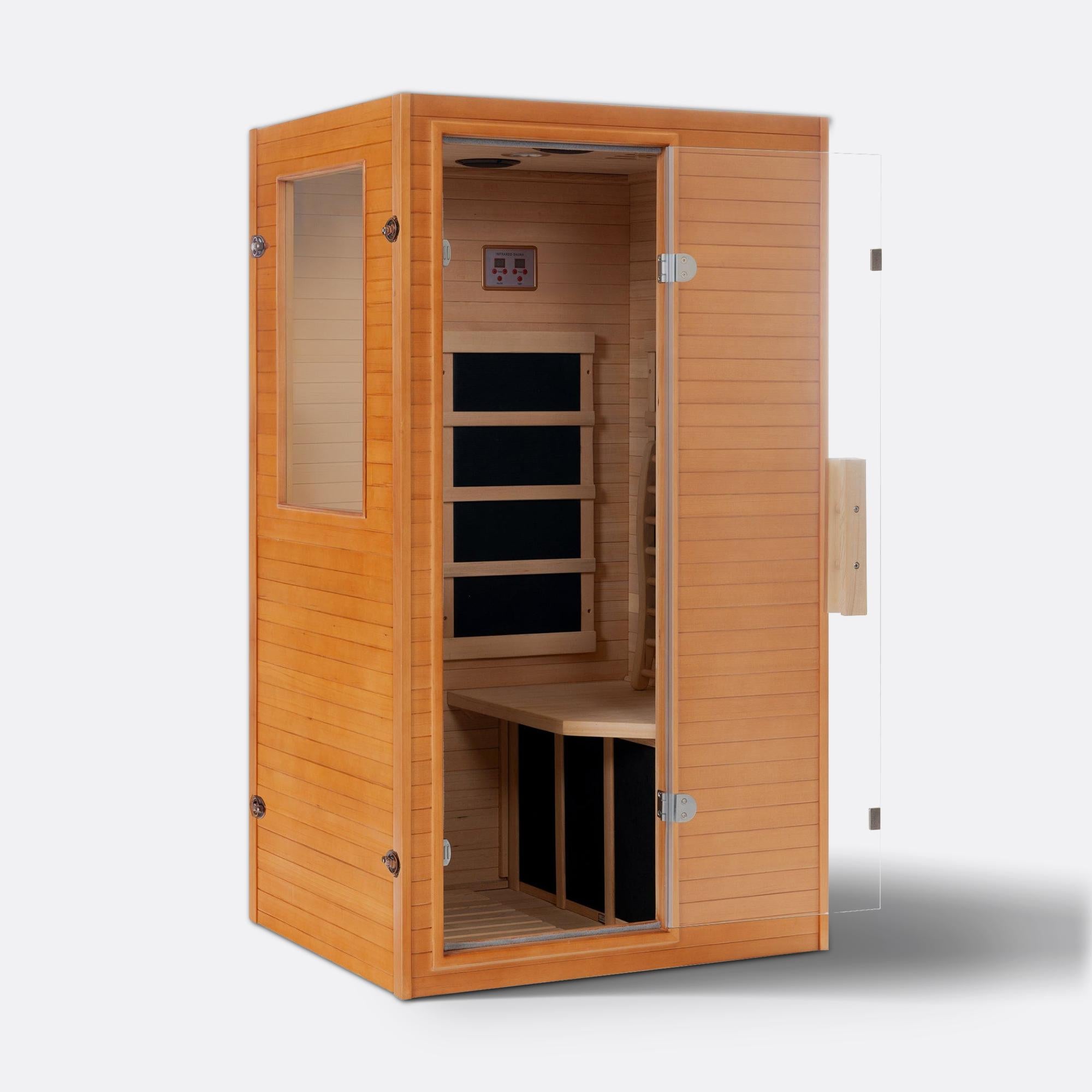
SpringSpa Full Spectrum Infrared Sauna with a Red-Light Therapy Lamp
Real Benefits You Can Feel in a Sauna
Using a red light therapy sauna isn’t just about skin—it’s also about overall wellness:
1. Skin health: Red light improves elasticity, reduces fine lines and helps heal minor blemishes.
2. Muscle recovery: Infrared light penetrates deep tissue, reducing soreness after workouts.
3. Circulation and detox: The combination of heat and infrared improves blood flow, which can support your body’s natural detox pathways.
4. Relaxation: Warmth plus light therapy triggers calming effects in the nervous system, helping with stress relief.
The mix of 660nm and 850nm is what makes these saunas more than just a hot room—they’re targeted therapy tools.
Why Precision Matters
A red light therapy sauna isn’t just about throwing light at your body. Quality panels like the SpringSpa's red-light therapy lamp's ALJ 300 use 30° cone lenses to focus the light and ensure consistent coverage. This way, both wavelengths reach the areas where they can make the most difference, and the energy output (irradiance) stays in the therapeutic range.
-
Red light (660nm): Usually 26–63 mW/cm² depending on distance from the skin.
-
Infrared (850nm): Can range 47–125 mW/cm², reaching deeper tissues without overheating the surface.
This careful calibration is why 660nm and 850nm are standard—they deliver measurable benefits safely.

30PCS of 660nm red light and 30PCS of 850nm near infrared light
Choosing the Right Sauna Session
When using a red light therapy sauna:
-
Set your session time according to your comfort—most devices allow 10–99 minutes.
-
Use the right wavelength combination for your goals: 660nm for skin, 850nm for deeper muscles, or both for a full-body approach.
-
Distance matters: Staying 15–30 cm from the panels ensures optimal energy absorption.
Remember, results vary by person, so start slowly and see how your body responds.
If you’re investing in a red light therapy sauna, these wavelengths are the reason it works for both beauty and wellness in one session.





Share:
How Does a Red Light Therapy Sauna Work on a Cellular Level?
Physical & Mental Benefits of Full Spectrum Infrared Saunas and Why