

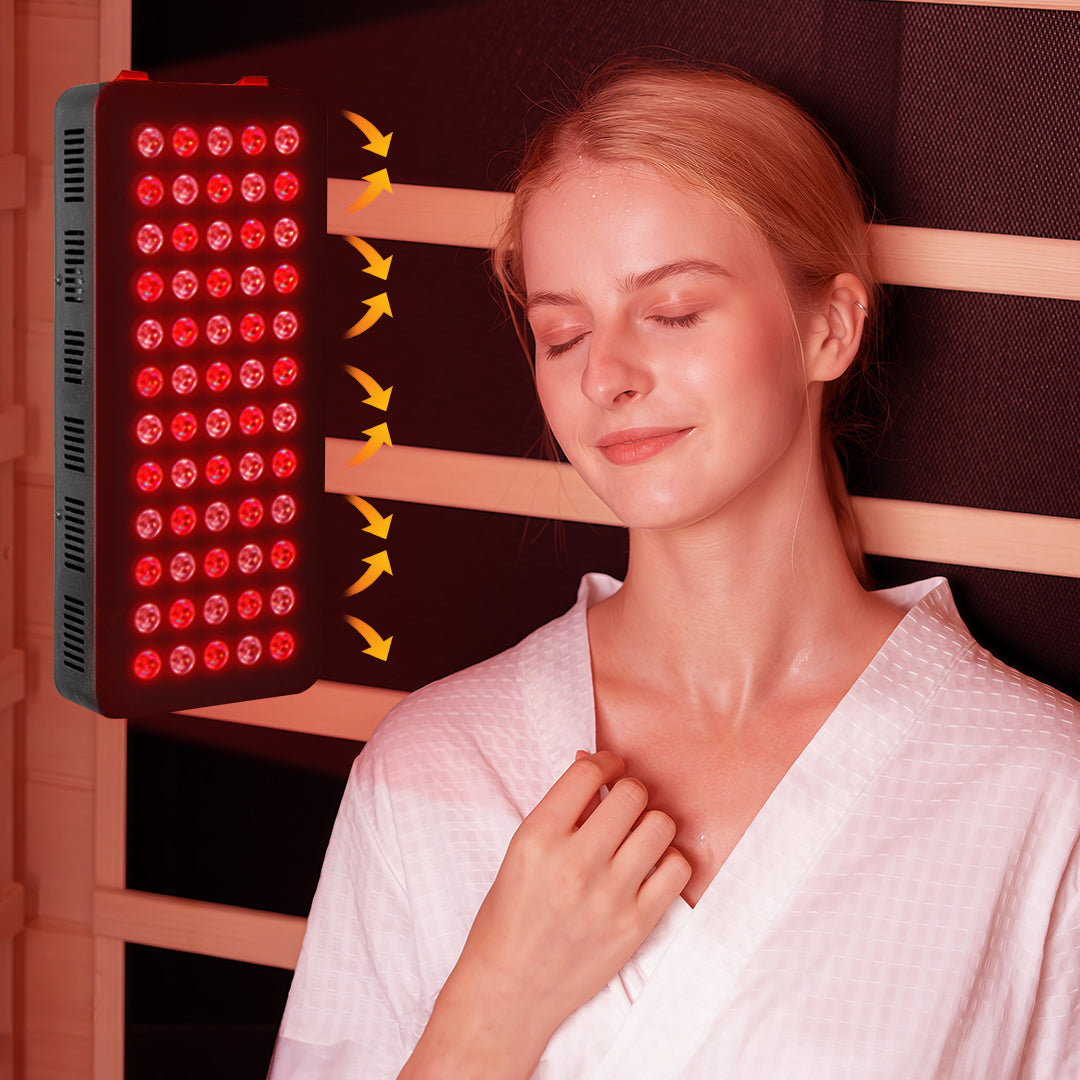
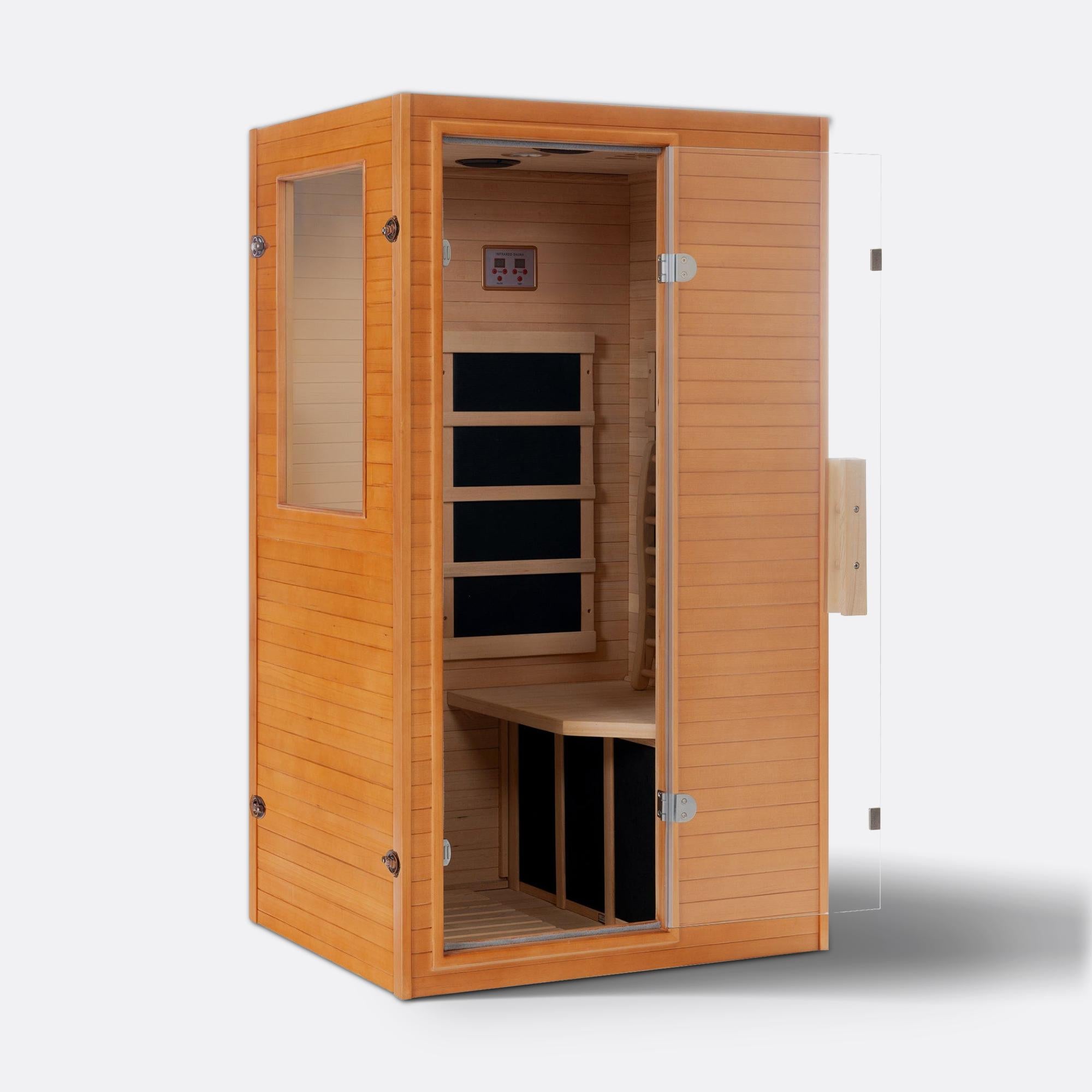
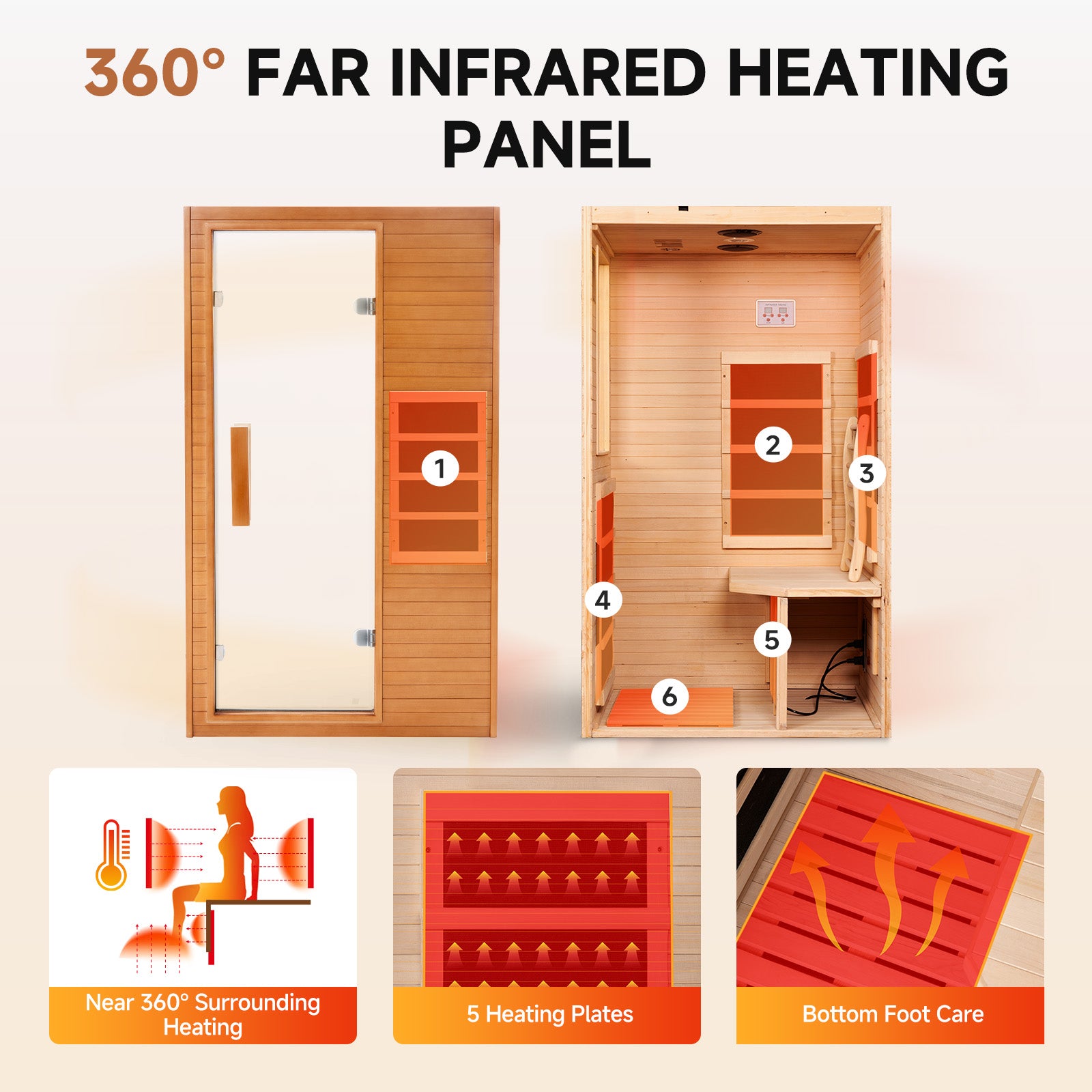
A red light therapy sauna might look simple from the outside - warm wood, soft glow, quiet heat—but inside your body, a lot is going on. This isn’t just about sweating or feeling relaxed. It’s about how your cells respond to light and heat and how that response helps your body recover, recharge and function better.
Let’s walk through what actually happens, starting at the smallest level: your cells.
Your cells are listening to light
Red light therapy uses specific wavelengths of red and near-infrared light, usually in the 630–880 nm range. These wavelengths are special because they don’t just bounce off the skin. They pass through it and reach muscles, joints, and connective tissue.
Once inside, the light is absorbed by your mitochondria—the part of the cell responsible for making energy. Think of mitochondria as tiny power stations. When they work well, your cells work well.
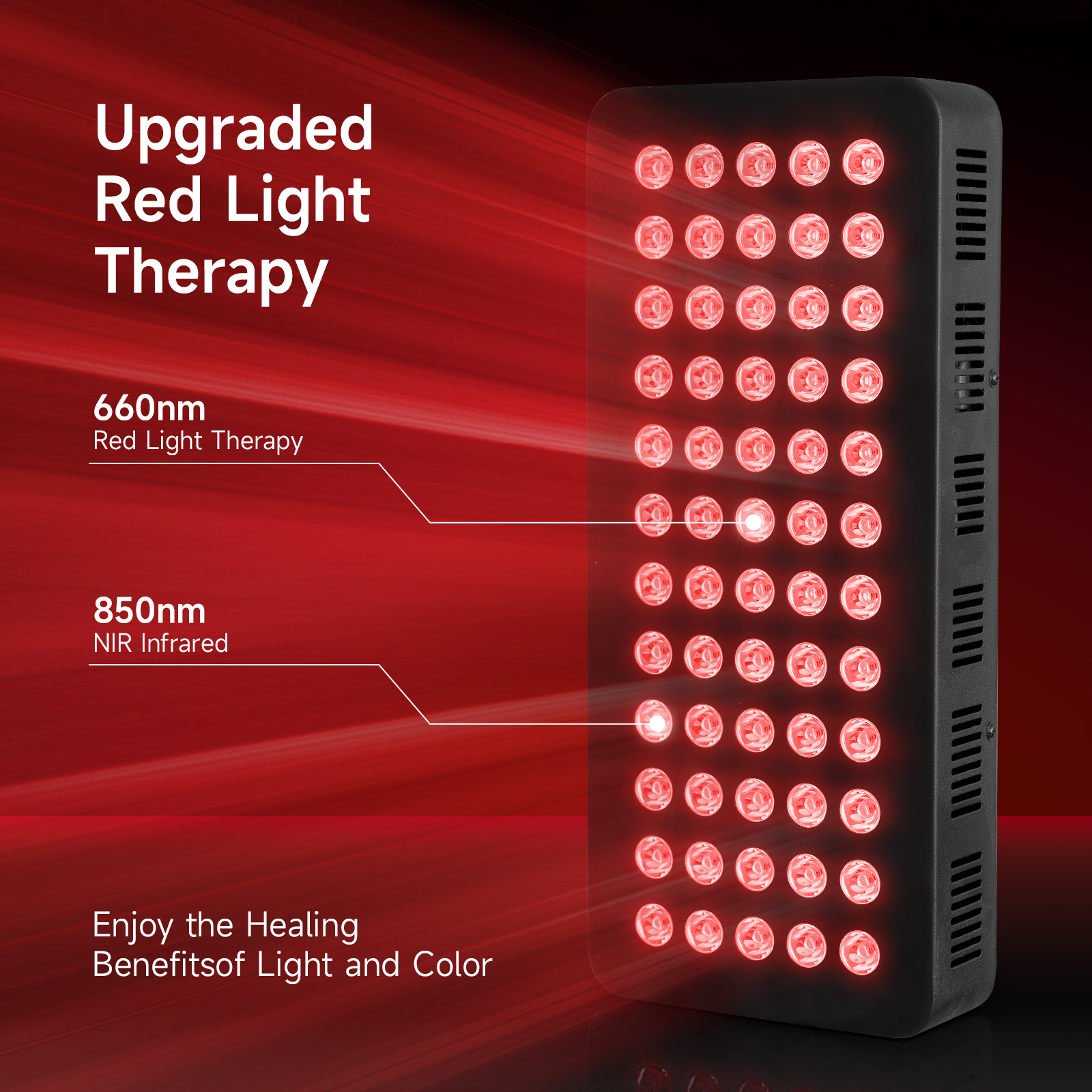
Medical grade 660nm red light therapy delivers targeted skin-level benefits such as rejuvenation and circulation support, while near-infrared 850 nm penetrates deeper into muscles and joints, promoting recovery, relief and improved cellular function.
Light turns mitochondria “back on”
Inside the mitochondria is an enzyme called cytochrome c oxidase. This enzyme reacts directly to red and near-infrared light.

Hypothesized beneficial effects NIR/red light on mitochondrial function (Nature.com)
When light hits it:
-
Oxygen is used more efficiently
-
Nitric oxide that was slowing things down gets released
-
The cell produces more ATP, which is the energy currency of the body
More ATP means cells have more fuel to do their jobs—repairing tissue, producing proteins, and staying resilient under stress.
This is why red light therapy isn’t just surface-level. It’s helping cells run more smoothly from the inside.
Heat adds a second layer of cellular activation
Now let’s talk about the sauna part.
The gentle heat in a red light therapy sauna creates a controlled form of stress. Not the bad kind—the useful kind. When cells warm up, they activate heat shock proteins (HSPs).

Postulated mechanism of action of photobiomodulation (Nature.com)
These proteins act like maintenance crews for your cells. They:
-
Protect existing proteins from damage
-
Help fix misfolded or damaged proteins
-
Improve how cells handle future stress
This response is similar to what happens during exercise. The body senses a challenge and adapts by becoming stronger and more efficient.
Better circulation means better cellular support
Both red light and heat encourage the release of nitric oxide, which helps blood vessels relax and widen.

(From ACS Publication)
On a cellular level, that means:
-
More oxygen reaches cells
-
More nutrients get delivered
-
Waste products are cleared away faster
Cells don’t function in isolation. They depend on a steady supply of resources. Improved circulation gives them exactly that, creating an environment where repair and recovery happen more easily.
Less inflammation, better balance
Cells under constant stress often produce too many reactive oxygen species (ROS). In excess, these molecules contribute to inflammation and cellular damage.
Red light therapy helps regulate ROS levels—not eliminating them, but keeping them in balance. This matters because ROS also play a role in signaling healing and adaptation.
With red light therapy sauna use, cells tend to shift away from an inflammatory state and toward a repair-focused state. That’s one reason people often report feeling looser, calmer, and less stiff after consistent sessions.

Hypothesized mechanism of action of NIR light therapy (from Frontiers)
Signals that support repair and renewal
When cells have more energy, better circulation and balanced stress signals, they start sending different messages.
Research shows red light and heat exposure can influence gene expression related to:
-
Collagen production
-
Muscle recovery
-
Skin renewal
-
Cellular survival and longevity
This doesn’t mean your body is being forced to change. It’s more like the environment is being adjusted so your body can do what it already knows how to do—just more efficiently.
Why combining red light and sauna matters
Red light therapy on its own boosts cellular energy. Sauna heat on its own improves circulation and stress adaptation. When combined, they support each other.
Light increases ATP production.
Heat improves delivery of oxygen and nutrients.
Together, they help cells respond faster and recover better.
This combination is why red light therapy saunas feel different from traditional saunas or standalone light panels. The experience isn’t just about temperature—it’s about cellular communication.
What this means for your body overall
When enough cells start functioning better, the effects add up:
-
Muscles recover more smoothly
-
Joints feel less stiff
-
Skin appears more resilient
-
The nervous system calms down
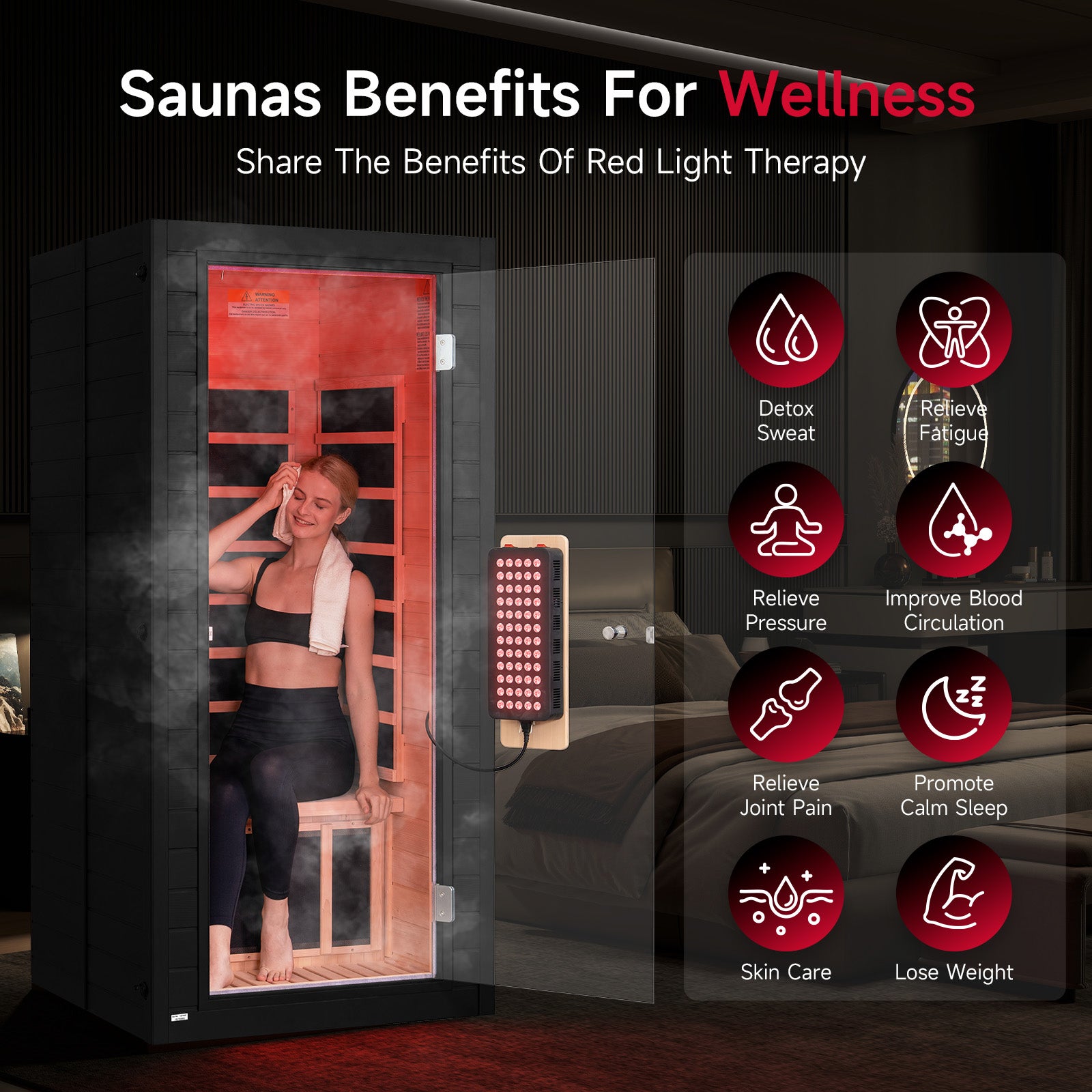
It’s not instant or dramatic. It’s gradual, cumulative, and rooted in how your cells manage energy and stress.
The takeaway, without the hype
A red light therapy sauna doesn’t “force” results. It creates conditions where your cells have:
-
More energy
-
Better protection
-
Clearer repair signals
From there, your body does the rest.





Share:
Steam vs Infrared vs Red-Light vs Hybrid Sauna
Why 660nm and 850nm Wavelengths Are Commonly Used in Red Light Therapy Saunas