


If you’ve been shopping for an infrared sauna, you’ve probably run into the phrase “full spectrum infrared sauna.” It sounds impressive. More wavelengths must mean more benefits, right? Not necessarily.
Full spectrum infrared saunas and far infrared saunas work in different parts of the infrared spectrum, and some models also add red light therapy or near-infrared light. That can make a full spectrum setup more versatile, but it doesn’t automatically make it better for everyone.
The better question is: What do you actually want from your sauna?

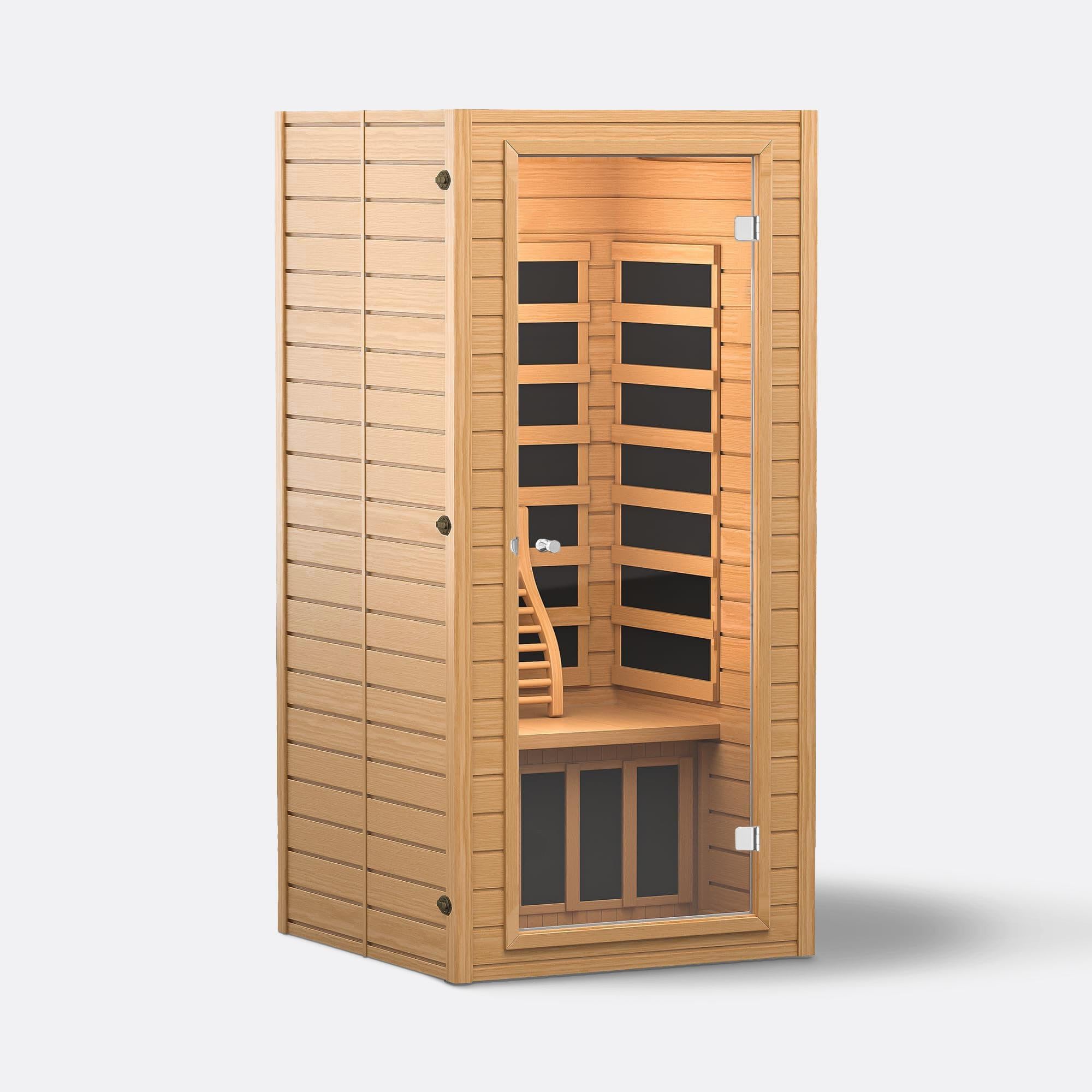
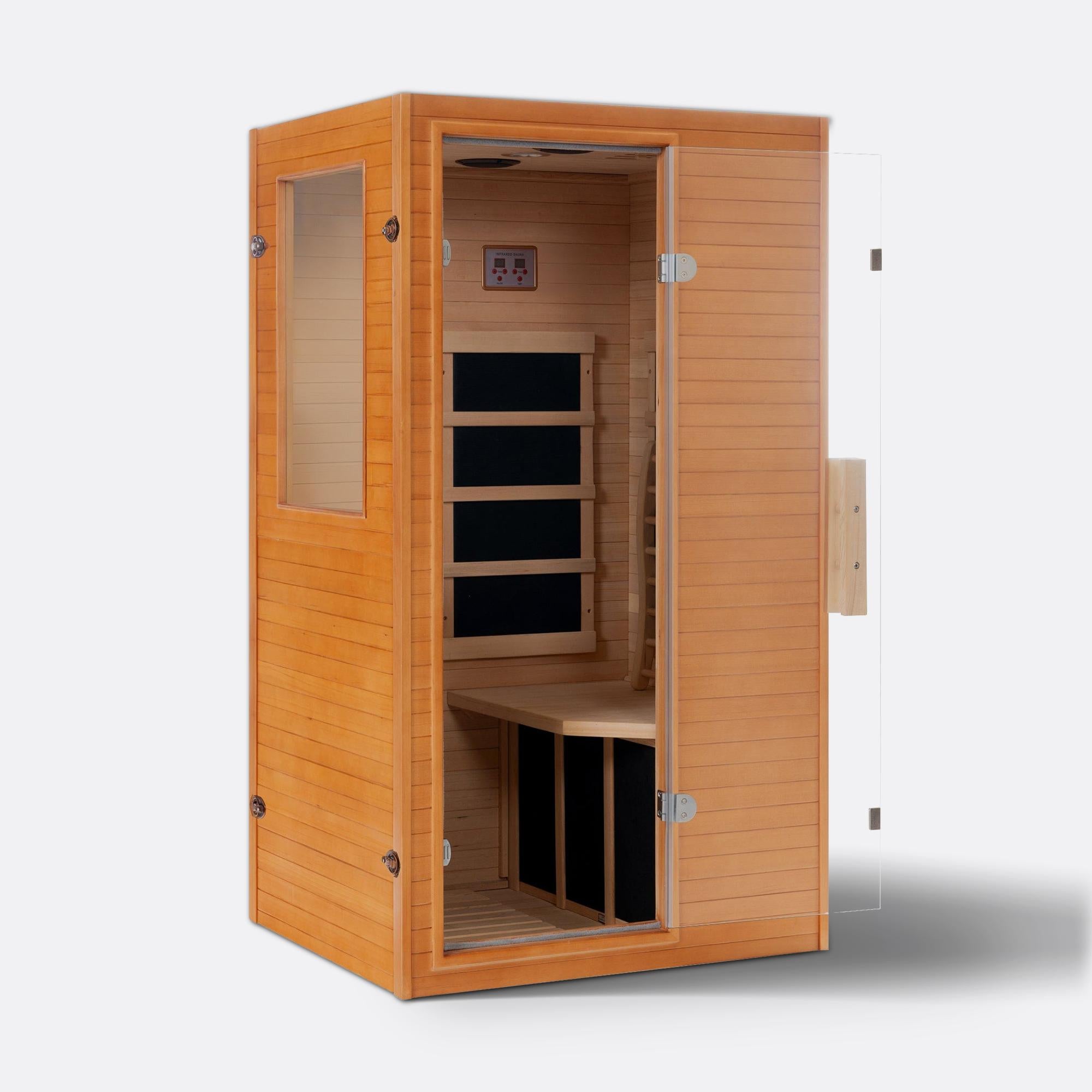
Springspa Full Spectrum Infrared Sauna vs Far Infrared Sauna
What Does “Full Spectrum” Actually Mean?
Infrared light is a broad section of the electromagnetic spectrum. It is commonly divided into near-infrared, mid-infrared and far-infrared ranges. The exact boundaries can vary slightly depending on the classification system, but near-infrared is generally the shorter-wavelength end, while far-infrared is the longer-wavelength end. The National Institutes of Health’s PubMed database describes infrared radiation as extending from roughly 760 nm to 100,000 nm, with different biological and thermal effects across the range.
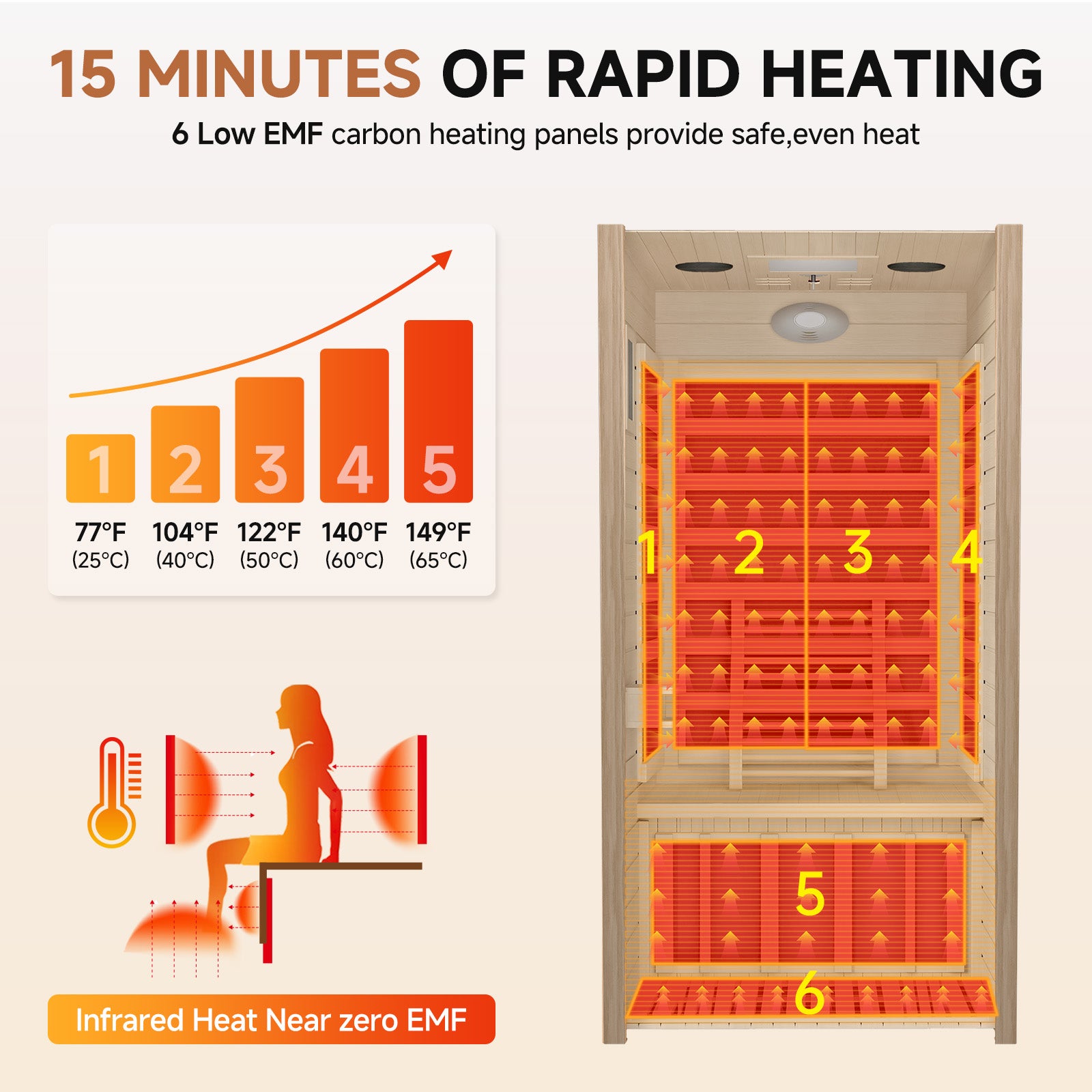
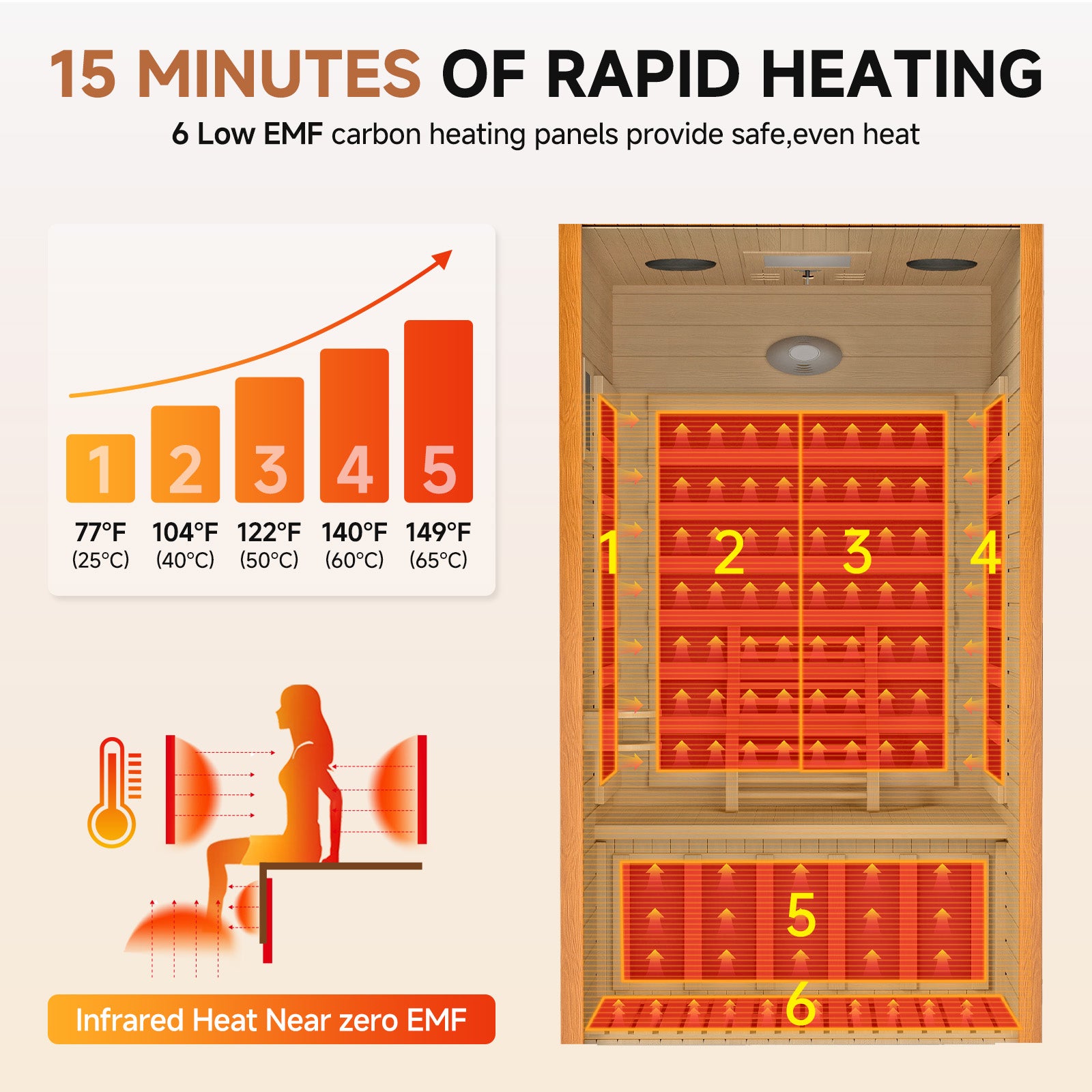
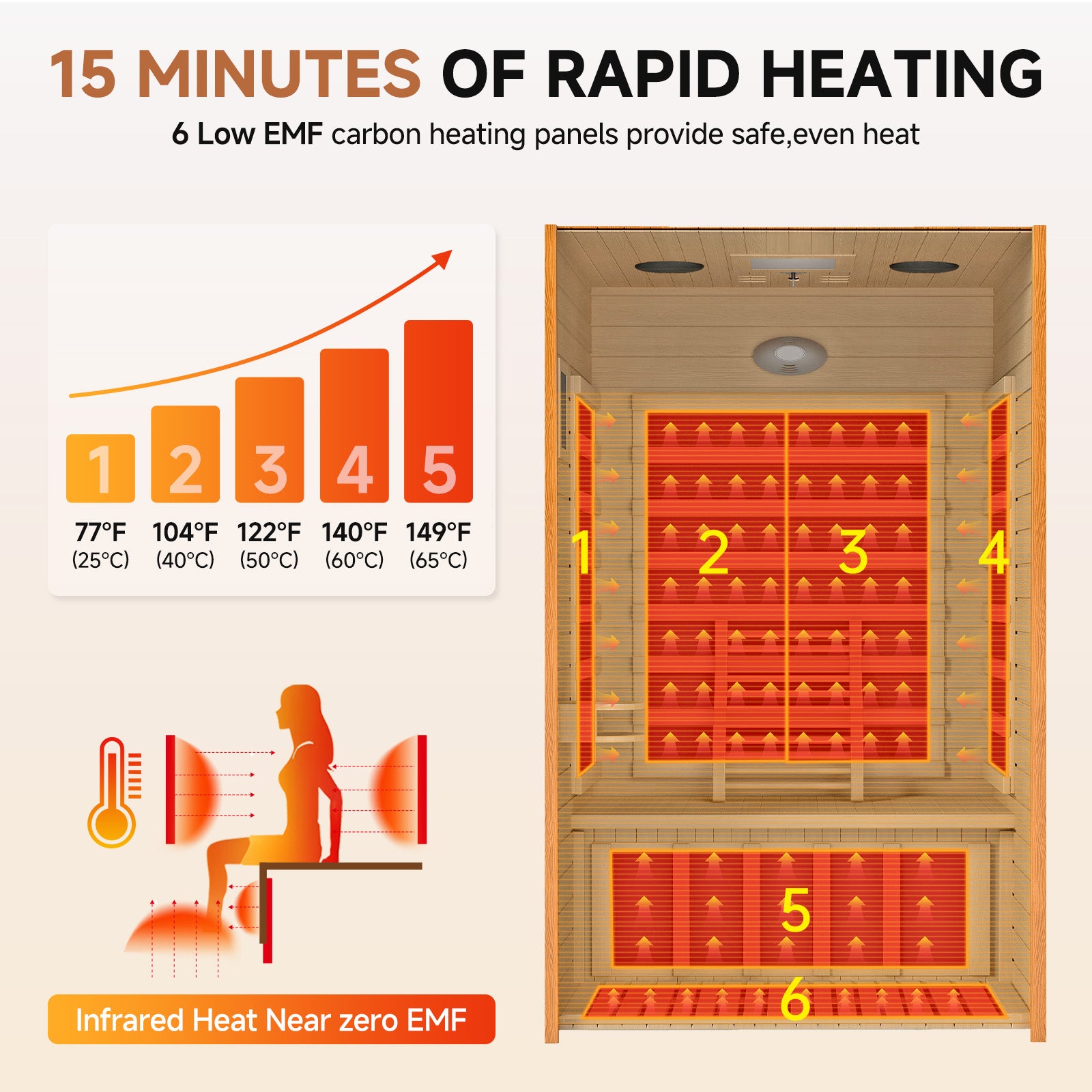
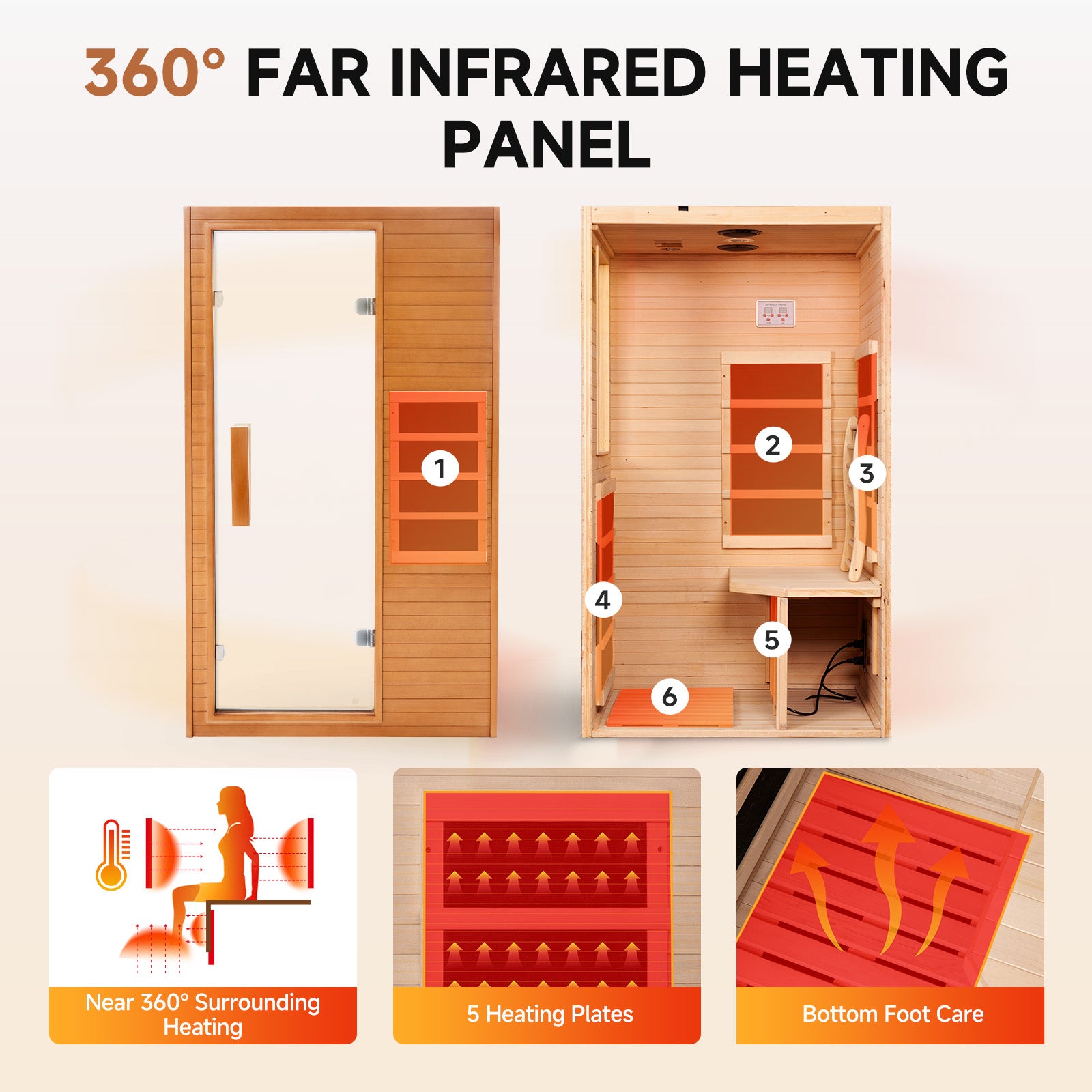
A far infrared sauna mainly uses longer infrared wavelengths to produce radiant heat. This is what most people picture when they think of an infrared sauna: heated panels warm the body while the surrounding air stays cooler than in a traditional hot-air sauna.
A full spectrum sauna attempts to combine different infrared ranges, usually including near-, mid-, and far-infrared radiation.
That sounds like a clear upgrade, but wavelength alone doesn't tell you how effective a sauna will be. The actual heater design, irradiance, temperature, session duration, body exposure and overall construction all matter.
Far Infrared Is Not “Old Technology”
There is sometimes a strange assumption online that far infrared is the basic version and full spectrum is the advanced version. That's not really fair.
Far infrared has been studied for years, including in sauna-based research. A review published through PubMed found evidence suggesting potential benefits of far-infrared sauna therapy for some cardiovascular risk factors, although the authors also noted that the overall evidence was limited and that many health claims made by manufacturers were not strongly supported.
More recent research continues to investigate infrared sauna use and heat therapy, including cardiovascular and physiological responses. Infrared heaters transfer radiant energy to the body, allowing a sauna to operate at lower air temperatures than a traditional sauna while still creating a meaningful heat load.
So if your main goal is heat, sweating, relaxation, and a comfortable sauna experience, you don't necessarily need a full spectrum model. A well-designed far infrared sauna can already do that very well.
Then What Does Full Spectrum Add?
The interesting part of full spectrum isn't simply “more heat.”
Shorter infrared wavelengths, particularly near-infrared, behave differently from far infrared. Near-infrared light can penetrate skin and subcutaneous tissue more effectively than longer infrared wavelengths, although penetration and biological effects depend heavily on wavelength and intensity. This is one reason full spectrum products are attractive to people who want more than a traditional sauna session. However, there's an important distinction here.
Near-infrared light used for photobiomodulation is not the same thing as using infrared simply to heat your body.
Photobiomodulation, often called red light therapy or low-level light therapy, uses specific wavelengths and doses of light to influence biological activity. Research on photobiomodulation has investigated wavelengths in the red and near-infrared ranges for applications such as pain, wound healing, and other conditions. At the same time, systematic reviews have emphasized that more high-quality randomized trials are still needed for many home-use applications.
So adding a red-light panel to a sauna creates a different function, rather than simply making the sauna heater “stronger.”

Red Light Therapy Changes the Conversation
This is where a sauna with a dedicated red-light panel becomes particularly interesting. For example, the sauna specifications provided for this model include a separate LED red-light therapy panel using 660 nm red light and 850 nm near-infrared light. The panel is rated at about 83 W, with measured irradiance varying according to distance and light mode.
Those wavelengths are commonly discussed in photobiomodulation research. A 2025 evidence-based consensus published in the Journal of the American Academy of Dermatology found that photobiomodulation has evidence for several clinical applications, while also emphasizing the importance of appropriate clinical use. That doesn't mean sitting in a sauna with a 660/850 nm panel will automatically produce every benefit associated with clinical photobiomodulation. Dose matters. Distance matters. Exposure time matters. The exact device configuration matters too.
That's why it is better to describe a sauna like this as combining infrared heat with red and near-infrared light, rather than simply claiming that it is “more powerful.”
Full Spectrum vs. Far Infrared: Which One Feels Better?
This may actually be more important than the marketing terminology. Far infrared saunas are often popular because they can create a substantial heat experience without requiring the extremely high air temperatures associated with traditional saunas. Research on far-infrared sauna therapy has described this lower-temperature environment and its physiological heat response.
Full spectrum systems can provide additional wavelengths, but that doesn't necessarily make the sauna feel dramatically hotter or more relaxing.
Some people simply prefer the sensation of far infrared heat. Others like the idea of combining sauna heat with a dedicated red-light session.
And that's where brands such as Springspa can make the category more interesting by combining infrared sauna features with red light therapy rather than treating them as completely separate wellness products.

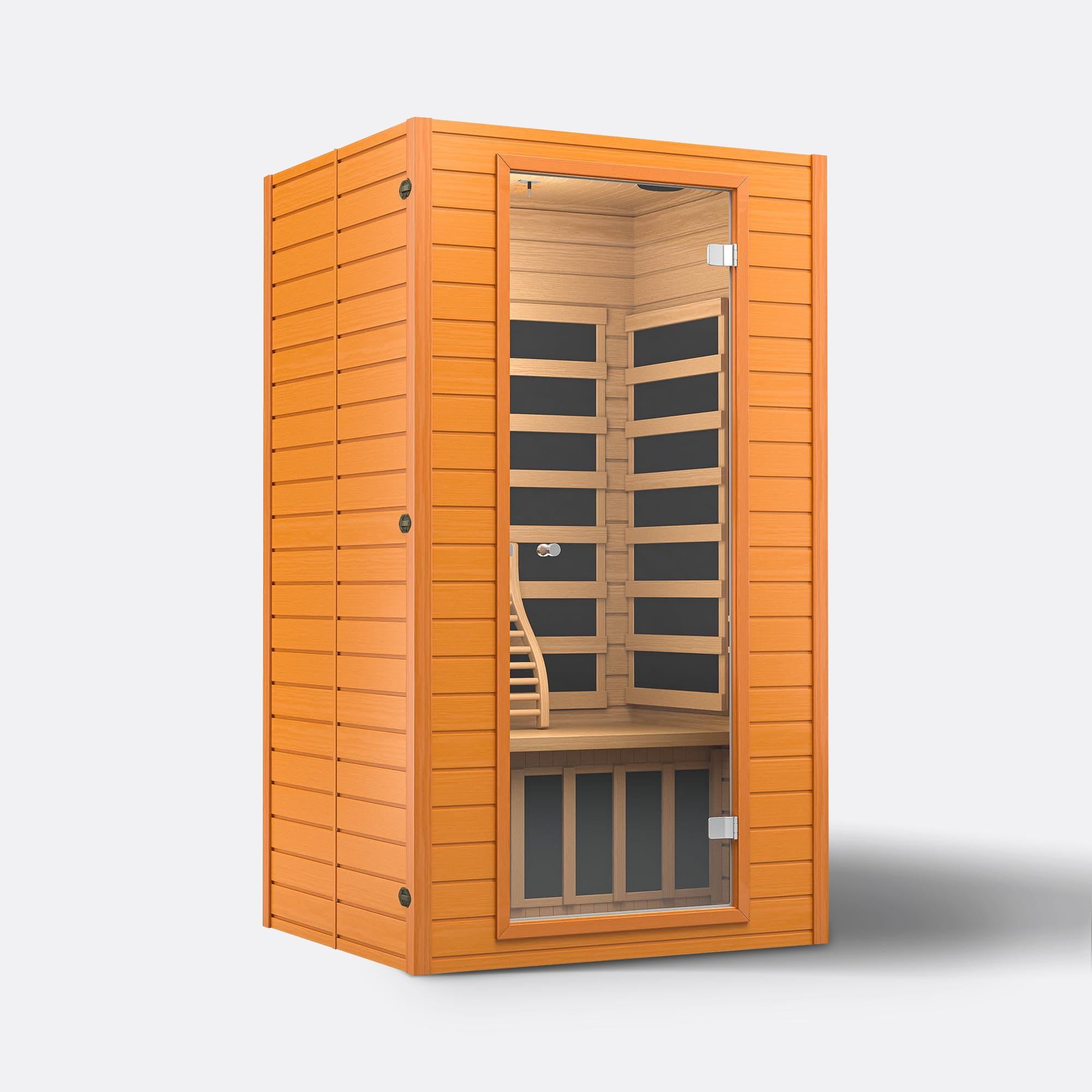
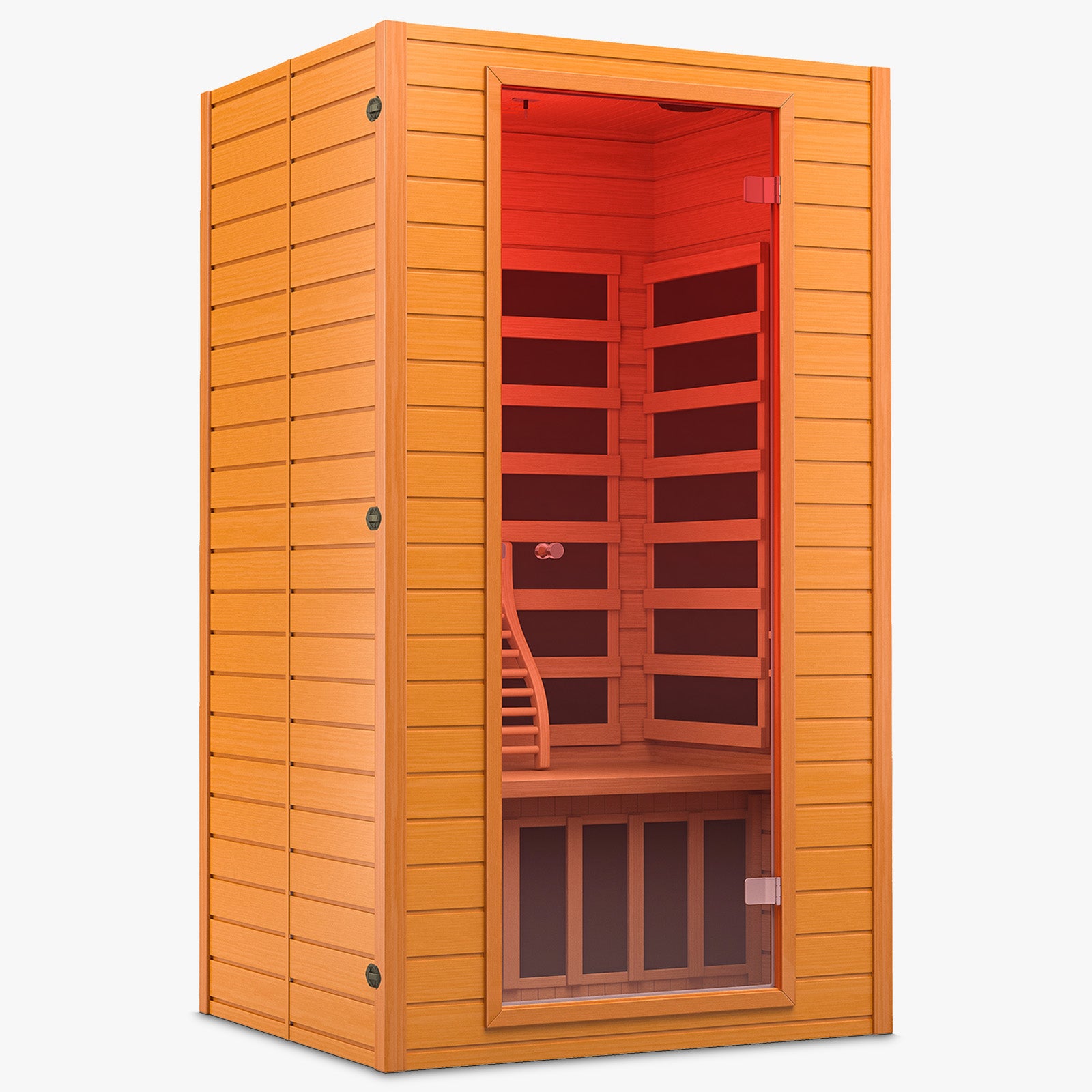
Springspa Full Spectrum Infrared Sauna with 660-850nm Red Light Panel
Does Full Spectrum Mean Deeper Penetration?
This is one of the claims worth treating carefully. You will often see infrared sauna advertisements suggesting that different wavelengths penetrate different depths of tissue. There is some scientific basis for wavelength-dependent penetration, particularly with near-infrared light, but it would be misleading to turn that into a simple “deeper is better” argument.
Infrared radiation interacts with tissue through absorption and scattering, and its effects depend on wavelength, intensity, exposure time, and tissue composition. Scientific reviews describe different biological responses across infrared wavelengths rather than one universal depth or benefit. So don't choose a sauna simply because its marketing says one wavelength “goes deeper.”
Look at the whole system.
Which Sauna Makes More Sense for You?
If your priority is traditional infrared sauna heat, a far infrared sauna can be a very sensible choice.
If you want heat plus additional light exposure, a full spectrum model may be more appealing.
And if you're specifically interested in red light therapy, don't assume that the words “full spectrum” automatically tell you enough. Check the actual red and near-infrared wavelengths, irradiance, treatment distance, and session settings. For example, a dedicated 660 nm/850 nm panel gives you considerably more useful information than simply saying “red light included.”
That's the difference between buying based on a buzzword and buying based on specifications.
So Is Full Spectrum Really Better?
Sometimes. But not automatically.
A full spectrum infrared sauna can offer more wavelength variety, which may make it more versatile. If you want infrared heat and separate red/near-infrared light exposure in the same space, that combination can be attractive. But if your main goal is simply relaxing, warming up, sweating, and enjoying regular infrared sauna sessions, a good far infrared sauna may already provide what you're looking for.
The science also doesn't support the idea that every claimed benefit becomes stronger just because a sauna uses more infrared wavelengths. Far infrared sauna research itself has limitations, while photobiomodulation research is highly dependent on wavelength, dose, and treatment protocol.
So instead of asking “Which one has more wavelengths?”, ask a more useful question: “Which combination of heat and light fits the way I actually plan to use the sauna?”
For someone who wants a straightforward home sauna experience, far infrared may be plenty. For someone who wants a broader light-and-heat setup, full spectrum with a dedicated 660 nm and 850 nm panel can offer more flexibility.
More technology can be useful. It just isn't automatically better.






Share:
Full Spectrum Infrared Sauna vs Red Light Therapy: Why They’re Not the Same Thing
Does Full Spectrum Infrared Sauna Actually Burn More Calories?