

If you’ve been looking at infrared saunas, you’ve probably noticed something else showing up in product descriptions: red light therapy. At first glance, it sounds like the same technology with two different names. After all, both involve infrared or red wavelengths, right? Not quite.
A full spectrum infrared sauna and a red light therapy system can work together, but they are not designed to do the same thing. One is primarily a heat-based experience, while the other uses specific wavelengths of light for photobiomodulation. That difference is easy to miss, especially when both features are built into the same sauna.
What Does a Full Spectrum Infrared Sauna Actually Do?
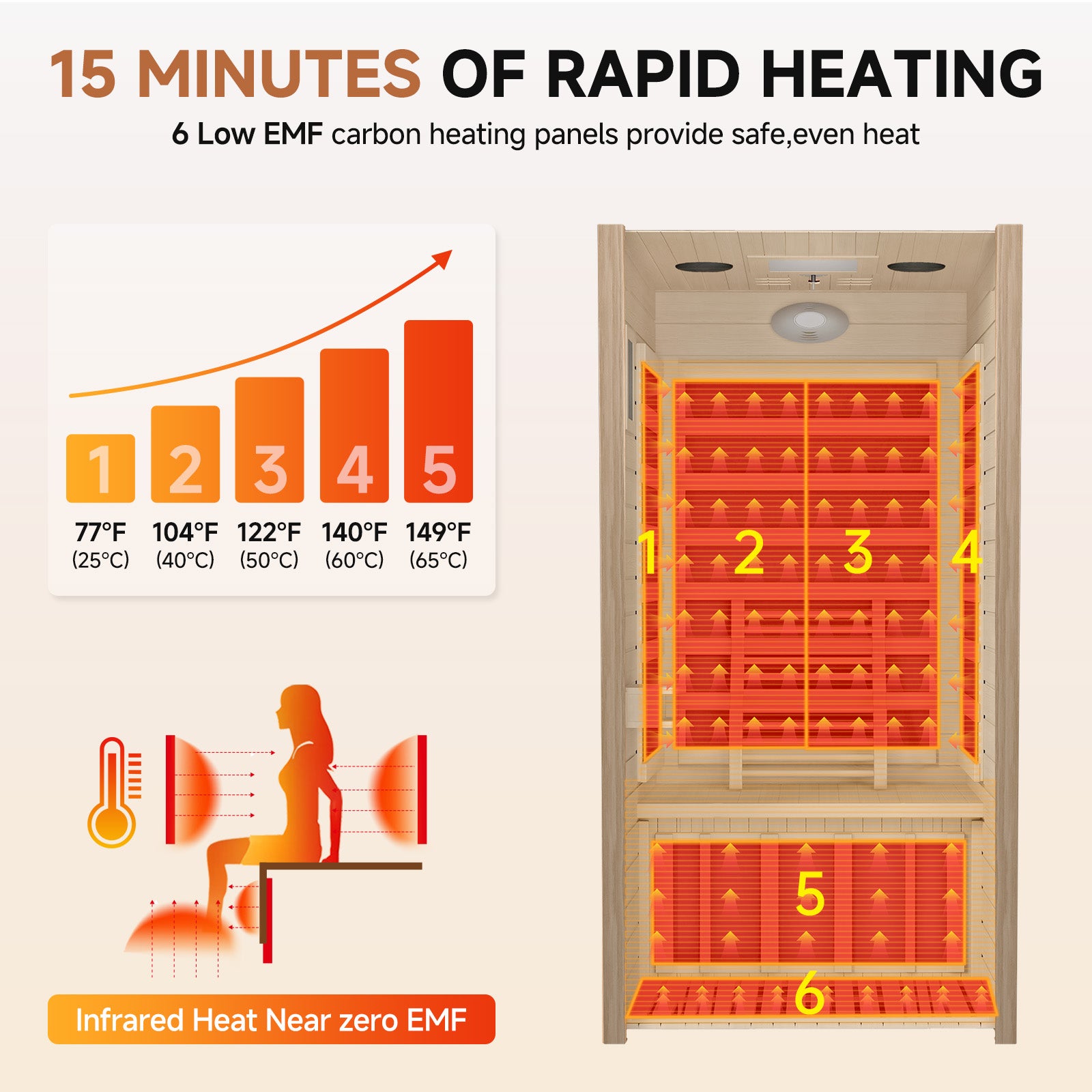
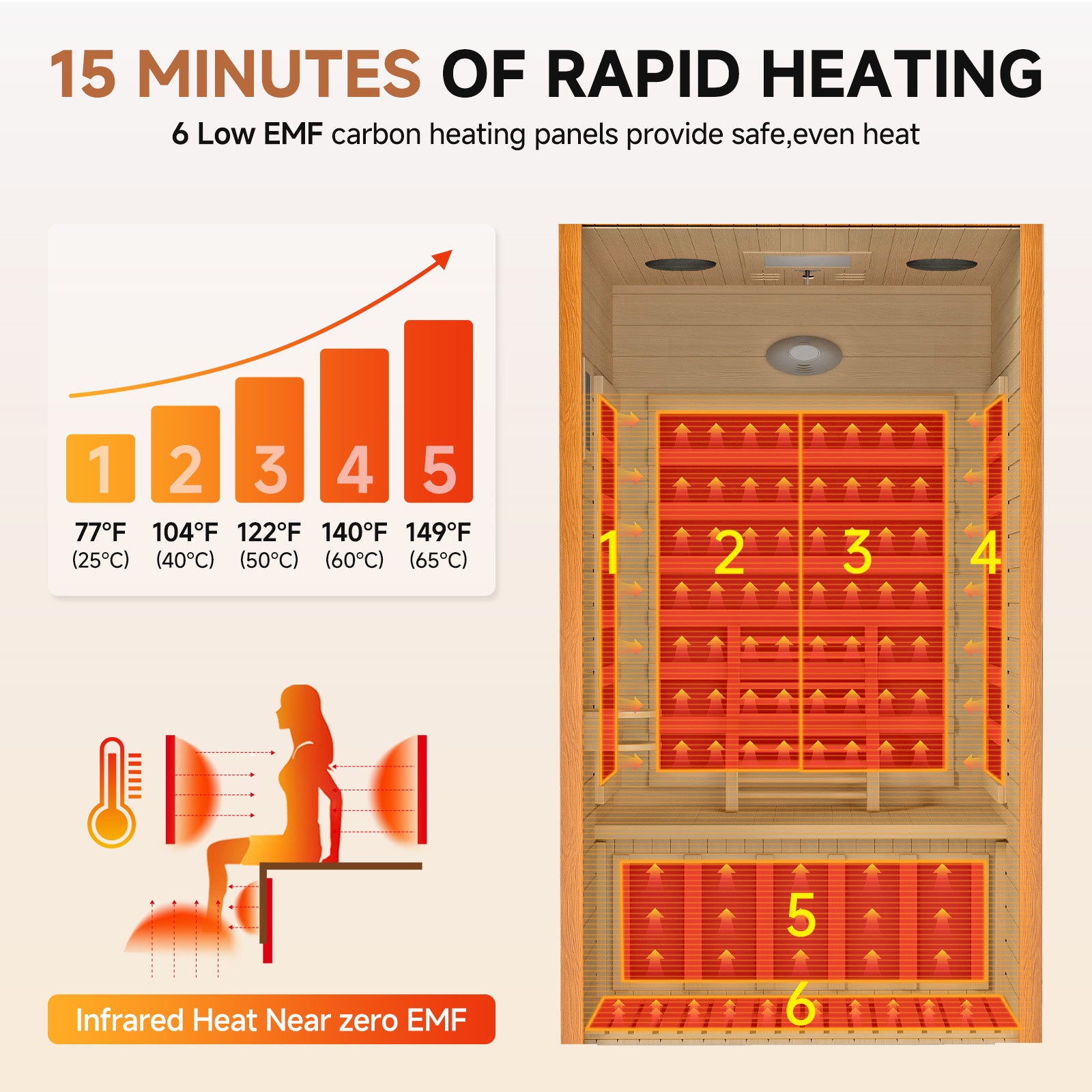
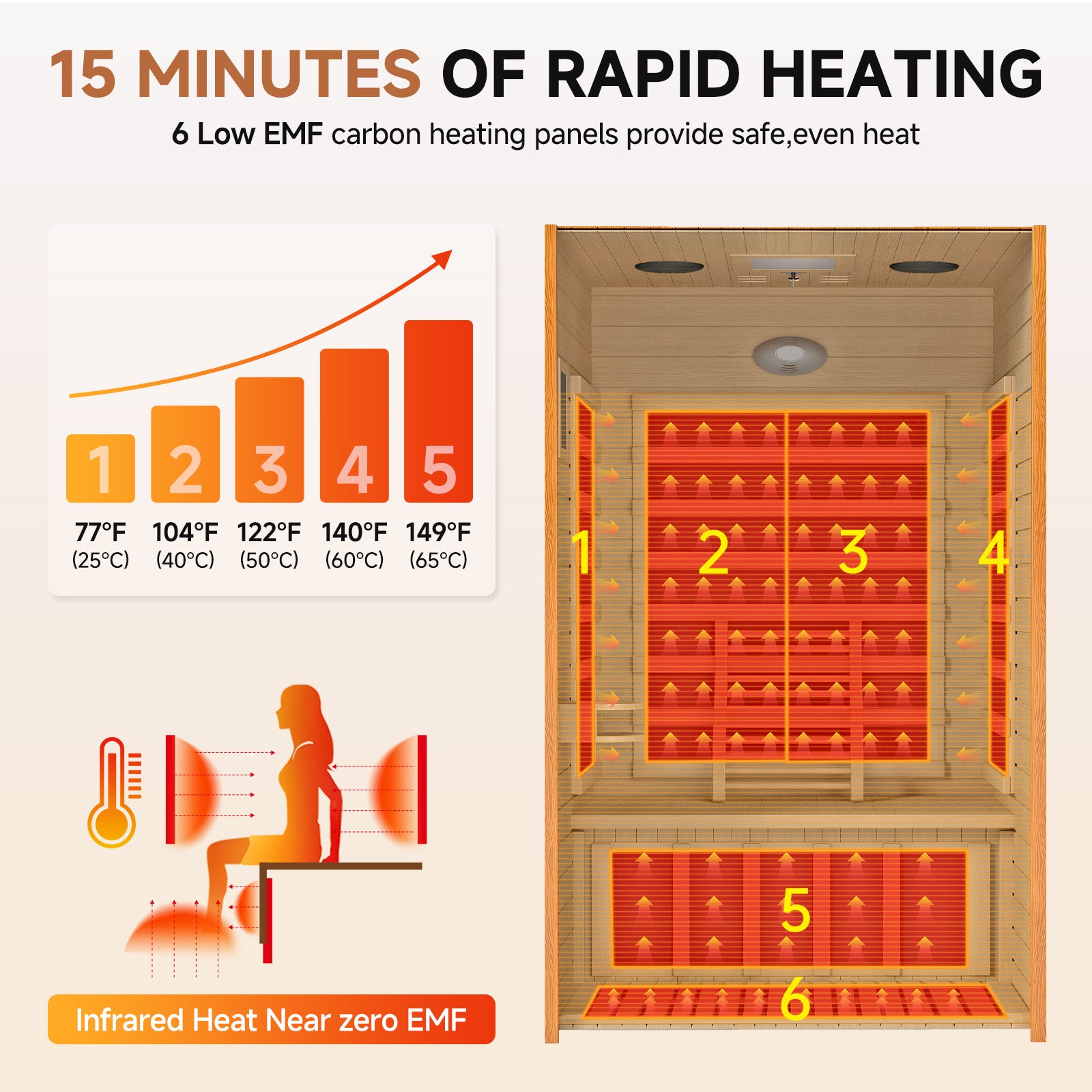
Infrared radiation is a broad part of the electromagnetic spectrum. Infrared sauna systems use infrared energy to warm the body, creating a heated environment where your body responds to the rise in temperature. A “full spectrum” infrared sauna generally refers to the use of multiple portions of the infrared range, rather than relying on one narrow section. The exact wavelengths and heating technology can vary from one sauna to another, so the phrase itself doesn't tell you everything about the system.
The important point is that the sauna's main function is heat exposure.

As your body gets warmer, your cardiovascular system responds. Heart rate can increase, blood vessels can dilate, and sweating helps regulate body temperature. Research on infrared sauna bathing has reported short-term changes in cardiovascular measures, although researchers also point out that more high-quality evidence is needed before making broad health claims. A systematic review and meta-analysis published in Clinical Cardiology found short-term improvements in some cardiac measures following infrared sauna treatment, while noting that evidence for long-term effects remains limited.
So when you sit inside an infrared sauna, the heat itself is a major part of what your body is responding to.
Red Light Therapy Has a Different Job
Red light therapy works from a different starting point. Also known as photobiomodulation, or PBM, it uses specific red and near-infrared wavelengths from LEDs or lasers. Instead of relying primarily on heat to create a physiological response, PBM uses light energy to interact with biological tissue.
Research has investigated how red and near-infrared light can influence cellular processes, including pathways involving mitochondria, ATP production, nitric oxide, and reactive oxygen species. These mechanisms are still being studied, and the results depend heavily on factors such as wavelength, irradiance, treatment time and dose. That is why simply saying “this sauna has infrared” isn't enough to determine whether it provides meaningful photobiomodulation.
The wavelength matters. The intensity matters. The distance from the light source matters. And the amount of energy delivered to the skin matters too.

A Sauna Can Have Both Technologies
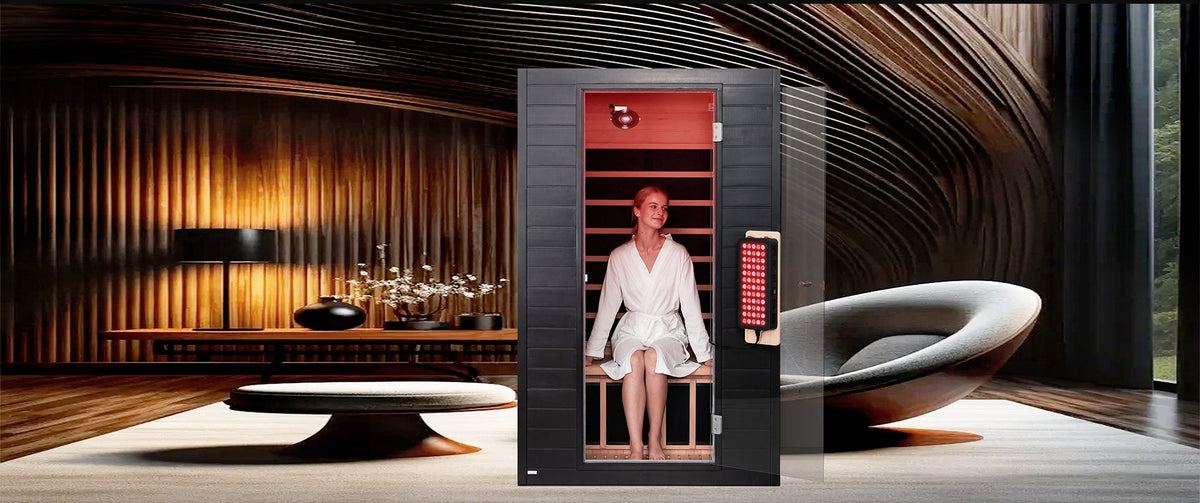
Here's where the confusion usually starts. A modern infrared sauna can include a dedicated red light therapy panel while still using infrared heaters for the main heating function. In other words, you're not necessarily getting red light therapy from the sauna heaters themselves.
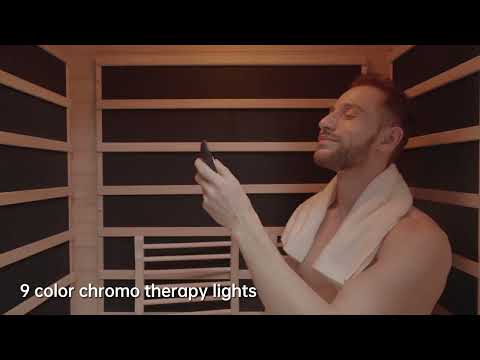
The Springspa sauna configuration, for example, includes infrared heating plus a separate LED red-light therapy lamp. According to the product documentation, the lamp uses 660 nm red light and 850 nm near-infrared light. It also provides different light modes and reports irradiance at several treatment distances. That distinction is worth paying attention to.
The sauna creates the heat environment. The dedicated light panel provides the red and near-infrared exposure.
So if a product description says “full spectrum infrared sauna with red light therapy,” don't assume those words are simply describing the same feature twice. They can refer to two separate systems working in the same cabin.
Why Wavelength Is More Important Than the Word “Infrared”
The word “infrared” can be surprisingly misleading. Infrared covers a large range of wavelengths. Not every infrared wavelength is being used for the same purpose, and infrared heating should not automatically be treated as photobiomodulation.
For example, the Springspa red-light panel specifies 660 nm and 850 nm wavelengths. Its documentation also lists different irradiance values at distances ranging from 6 to 18 inches. At 12 inches, for example, the reported average irradiance is approximately 33 mW/cm² in red mode and 60 mW/cm² in near-infrared mode. Why give you all those numbers? Because light therapy isn't just about having a bright red lamp sitting nearby. The amount of light reaching the treatment area is part of the equation.
A 2025 systematic review of whole-body photobiomodulation found that research on whole-body PBM is still relatively limited. Only five studies met the review's inclusion criteria, involving 105 physically active participants, and the authors concluded that more research is needed to establish clear benefits for exercise performance and recovery. That’s a useful reality check. Red light therapy has interesting research behind it, but not every marketing claim has the same level of evidence.
Does Full Spectrum Infrared Mean Better Red Light Therapy?
No. This is probably the biggest misconception worth clearing up. “Full spectrum” describes the infrared heating approach. It doesn't automatically tell you whether a sauna has an effective red light therapy system. If you're specifically interested in PBM, look for actual specifications.
What wavelength does the panel use? How much irradiance does it deliver? At what distance was that measurement taken? How large is the treatment area? How long is the recommended session? Those details are much more useful than simply seeing “red light included” on a product page. The same principle applies in reverse. A powerful red-light panel doesn't turn a room into a full spectrum infrared sauna. The two technologies have different purposes.
Which One Makes More Sense for You?
If what you want is the traditional sauna experience—warmth, sweating, relaxation, and passive heat exposure—then the infrared heating system is the feature doing most of the work. If your main interest is photobiomodulation, pay more attention to the dedicated red and near-infrared light system and its specifications.
And if you like both ideas, combining them in one sauna can be a practical option. You get the heated sauna environment while also having a dedicated light source rather than relying on the sauna's heating elements to provide a red-light therapy effect.
There is also an important safety point here. Heat exposure isn't appropriate for everyone. The supplied sauna manual specifically advises people at risk from hyperthermia, including those with cardiovascular disease, to seek medical advice before using the infrared warming sauna. It also says to stop using the unit if persistent skin redness or netlike skin changes occur.
So, despite sharing some terminology, full spectrum infrared sauna and red light therapy aren't interchangeable terms. One is centered around controlled heat exposure. The other is centered around specific light wavelengths and photobiomodulation.
When they're combined thoughtfully, as with a Springspa sauna equipped with a dedicated 660 nm/850 nm light panel, you can have both in the same space. Just don't confuse the sauna's infrared heat with the separate red light therapy system. They're two different pieces of technology, and understanding that difference makes it much easier to choose the right setup for what you're actually trying to get from your sauna sessions.











Share:
Can Indoor Infrared Saunas Be Used in Humid or Coastal Environments?
Is Full Spectrum Infrared Sauna Really Better Than Far Infrared Sauna?