


Thinking about adding an infrared sauna at home but not sure where it can go? You are not alone. A basement or home gym might seem like the obvious choice, but plenty of people live in apartments or simply don't have a dedicated wellness room. The good news is that an infrared sauna can often be installed in an apartment, bedroom, spare room, or home gym. A bathroom may also be possible, but it requires more attention to moisture, ventilation, electrical safety, and local building codes. Before choosing a location, there are a few practical things worth checking.
Can You Put an Infrared Sauna in an Apartment?
Yes, an infrared sauna can work well in an apartment if the space and electrical system are suitable. Unlike a traditional sauna, an infrared sauna is usually a self-contained cabin. It does not need a specially constructed sauna room, which makes it easier to fit into a residential space.

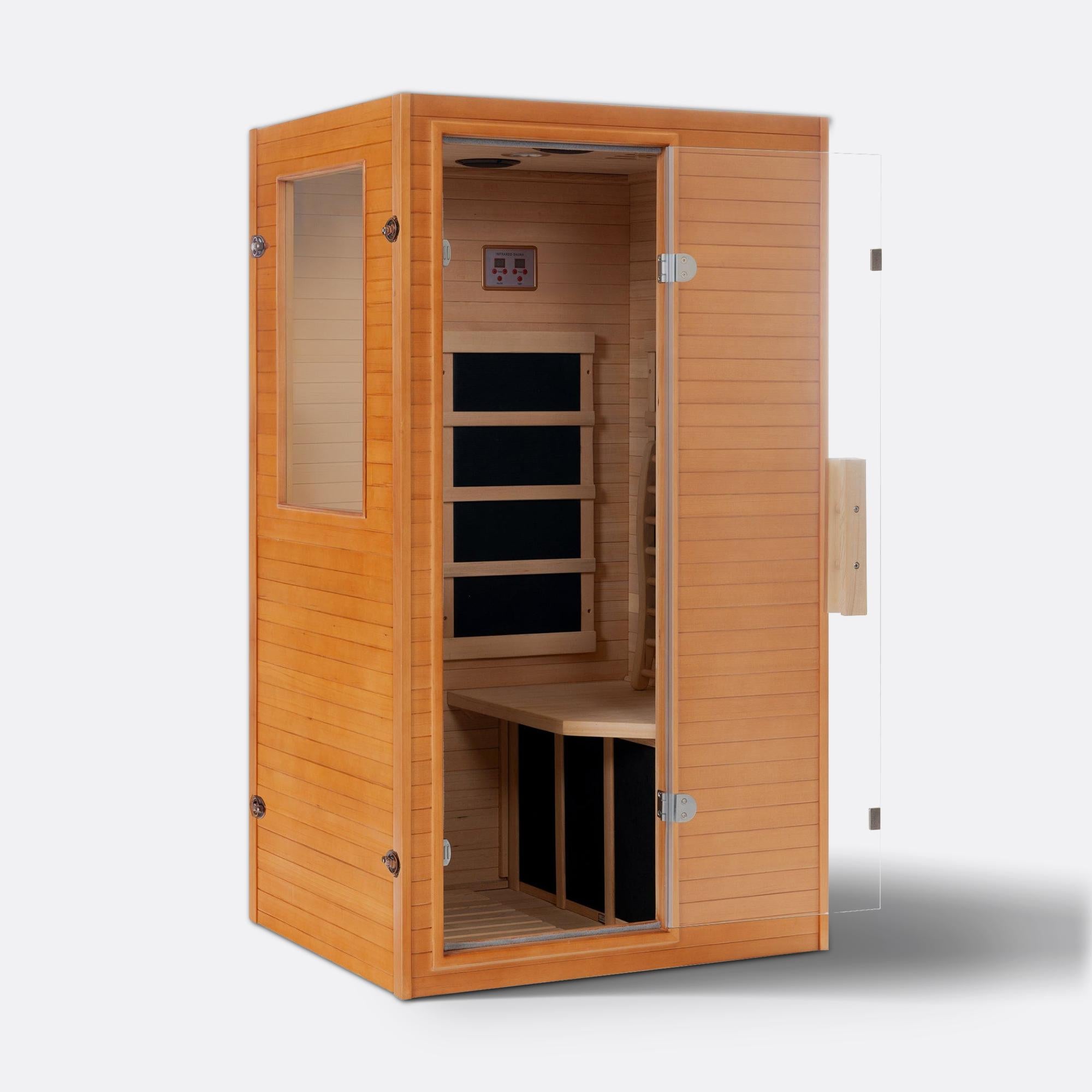
For example, a 2-person full-spectrum infrared sauna with red light therapy may measure around 1200 × 900 × 1900 mm, or approximately 47 × 35 × 75 inches. That is a fairly manageable footprint for a spare room or larger bedroom. The bigger issue may be electricity. The model discussed here is rated at 120V, 60Hz, and about 1,890W. At 120V, that represents a substantial electrical load, so you should not assume that any nearby outlet is suitable. Check the manufacturer's electrical requirements and have a qualified electrician inspect the circuit if you are unsure. The U.S. Consumer Product Safety Commission also recommends using electrical products according to manufacturer instructions and avoiding overloaded circuits.
You might be interested in: 2 Person full spectrum infrared sauna assembly guide
Apartment renters should also check their lease or ask the property manager about restrictions on high-power appliances, electrical modifications, or large equipment.
Is a Bedroom a Good Place for an Infrared Sauna?
A bedroom can be a practical location, particularly for a compact 1-person or 1–2 person infrared sauna. The biggest advantage is that you usually don't need to remodel the room. If there is enough floor space, access to the appropriate electrical circuit, and reasonable airflow, a bedroom can work. However, don't place the sauna directly against bedding, curtains, clothing, or other materials that could be affected by heat. Keep the area around the cabin clear and make sure the door can open comfortably.

You should also think about ventilation. Infrared saunas don't operate like steam rooms, but users still sweat, and moisture can accumulate inside the cabin. The manufacturer's instructions for this type of sauna recommend opening the door after use so heat and humid air can dissipate and the cabin can dry. A bedroom that becomes excessively warm or humid after every session may not be the most comfortable setup.
Can an Infrared Sauna Go in a Bathroom?
This is where things become more complicated. At first glance, a bathroom seems convenient. You already have ventilation, water nearby, and a shower just a few steps away. The problem is that a sauna combines heat and electricity, while bathrooms are designed around water and moisture. The sauna should not be exposed to direct water spray, and the manufacturer's instructions specifically warn against cleaning the cabin with steam cleaners, high-pressure cleaners, or sprayed water.
Electrical installation is another important consideration. Bathroom receptacles in the United States are subject to specific requirements, including GFCI protection under the National Electrical Code. So, don't simply place a sauna next to the shower and plug it into the closest outlet.
If you want to install an infrared sauna in a bathroom, check the sauna manufacturer's requirements and local electrical code first. A qualified electrician can help determine whether the location and circuit are appropriate.
How Much Space Does a 2-Person Infrared Sauna Need?
The sauna's listed dimensions are only part of the story. A 2-person model measuring approximately 47 × 35 × 75 inches needs enough surrounding space for the door, electrical connection, ventilation, and comfortable entry and exit. You also need to consider the delivery route. The shipping carton for the model discussed here is approximately 195 × 126 × 40 cm. That means you should measure your front door, hallways, stairs, elevator and other tight spaces before delivery. Getting the sauna into the room can be harder than finding a place for it once it arrives. Springspa also recommends having at least two adults assemble the sauna together.
Does an Infrared Sauna Need Ventilation?
It needs reasonable airflow, but it doesn't require the same type of ventilation system as a steam room. After a session, opening the sauna door allows heat and moisture to escape. This is particularly useful in smaller rooms. Keeping the cabin dry also helps protect the wood and other components. Avoid installing an infrared sauna in a consistently damp area unless the manufacturer specifically approves that environment. A dry bedroom, spare room, home gym or wellness room is generally easier to manage than a humid bathroom.
What About Full-Spectrum Infrared and Red Light Therapy?
A full-spectrum infrared sauna may combine different infrared wavelengths with additional wellness features such as red and near-infrared light. The model discussed here uses a red-light panel with 660 nm red light and 850 nm near-infrared light. Its specifications list an irradiance range measured at different treatment distances. Those technical specifications describe the light output, but they should not be confused with proof that the sauna can treat a medical condition. Research into infrared sauna use and red-light therapy is ongoing. Mayo Clinic notes that infrared saunas may have potential health benefits, but more research is needed to establish many specific health claims. For that reason, it is better to view red light therapy as an additional wellness feature rather than a replacement for medical treatment.
Brands such as Springspa also combine infrared sauna experiences with features such as red light therapy, giving homeowners another way to create a dedicated wellness space without building a traditional sauna room.
Which Room Is Best for an Infrared Sauna?
If you have several options, a dry spare room or home gym is often the easiest choice. A bedroom can work well when space and electrical requirements are suitable. An apartment can also accommodate an infrared sauna, but renters should check building rules, electrical capacity, and delivery access before ordering. A bathroom requires more caution because of water, humidity, and electrical safety requirements. A garage or basement may work too, provided the space is dry, the temperature is appropriate, and the manufacturer allows installation there.
What Should You Check Before Installation?
Before bringing the sauna home, check four things: space, electricity, moisture and access. Measure the room and the route the sauna will take to get there. Confirm the voltage, frequency, wattage, and circuit requirements. Keep the sauna away from direct water exposure and allow heat and moisture to escape after use. Most importantly, follow the manufacturer's installation instructions rather than improvising.
If you feel dizzy, weak, nauseated or otherwise unwell during a sauna session, stop using it and leave the cabin. Cleveland Clinic notes that dehydration and overheating are among the risks associated with sauna use and recommends staying hydrated and leaving if you feel unwell. For people with certain medical conditions or those taking medications that may affect heat tolerance, speaking with a healthcare professional before sauna use is sensible.
So can an infrared sauna be installed in an apartment, bedroom or bathroom?
Yes, but the location needs to be suitable for the equipment. A dry room with enough space, appropriate electrical capacity, good airflow and safe access is usually the simplest option. Bathrooms can be possible, but they require extra attention to electrical and moisture-related safety.
With a little planning before installation, a full-spectrum infrared sauna with red light therapy can fit comfortably into many modern home wellness spaces.













Share:
Infrared Sauna and Red Light Therapy for Muscle Recovery and Joint Comfort?
Can Indoor Infrared Saunas Be Used in Humid or Coastal Environments?