

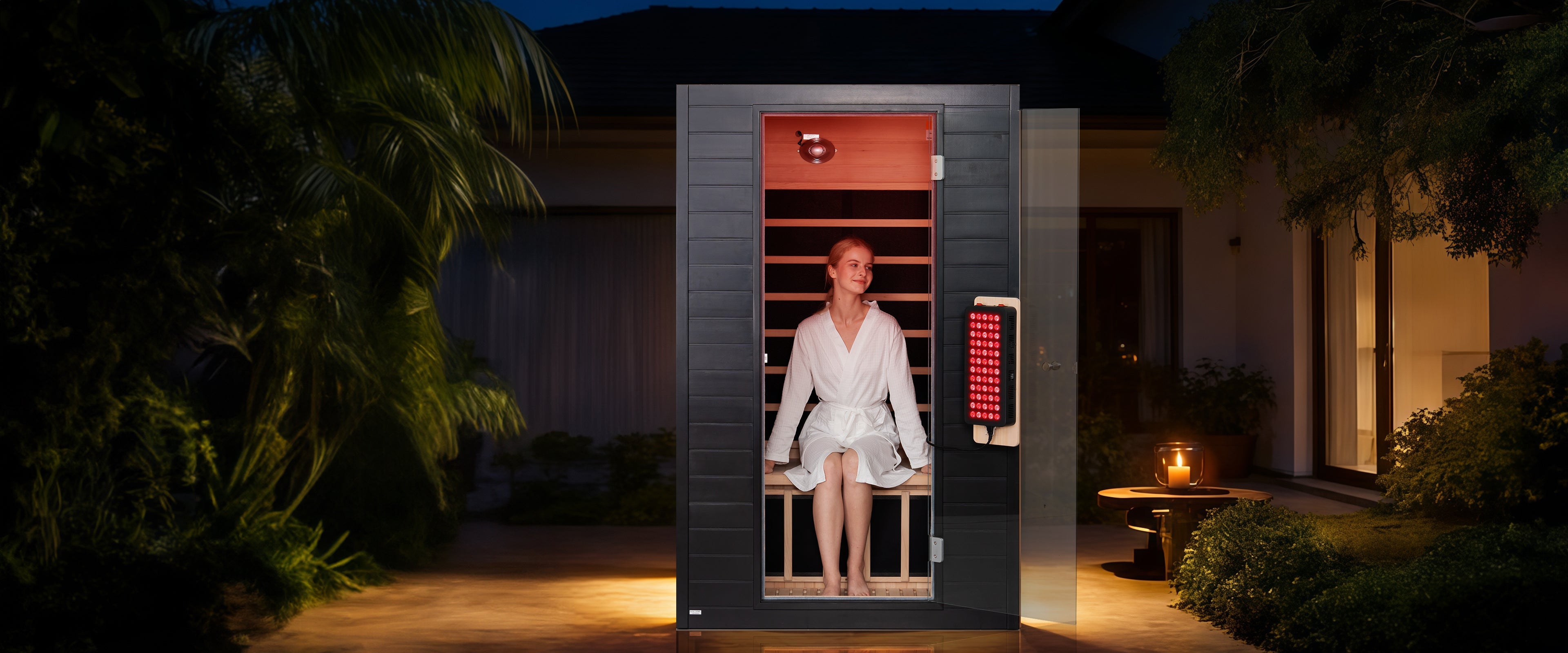
If you’re looking into full-spectrum infrared saunas, chances are you’ve come across the term EMF—and probably paused for a second. Some sources barely mention it, while others make it sound like the main thing you should worry about.
So what’s the real story here? How much EMF is safe, and how much attention does it actually deserve?
What EMF actually is (and why it shows up in saunas)
EMF stands for electromagnetic fields. Anytime electricity is moving, EMF exists. That includes things you use every day: phones, Wi-Fi routers, laptops, kitchen appliances and lighting.
Infrared saunas use electricity to power heating elements, so EMF naturally comes with that. The presence of EMF alone isn’t unusual or automatically a problem. What matters more is how strong it is, where it’s measured and how long you’re exposed.
Is there an official safety limit for sauna EMF?
There isn’t a single government-mandated EMF limit specifically for infrared saunas. Instead, most brands and wellness professionals rely on conservative reference ranges that are far below international exposure limits.
These ranges aren’t about panic or fear. They’re more about comfort, long-term use and giving people confidence—especially those who use saunas regularly.

Understanding EMF numbers in real life
EMF in saunas is usually measured in milligauss (mG). On its own, that number doesn’t mean much unless you know where it falls on the spectrum and where it’s being measured.
Here’s a simple comparison table that shows how EMF levels are commonly interpreted in full-spectrum infrared saunas.
EMF Levels in Full-Spectrum Infrared Saunas
| EMF Level (mG) | Common Description | What It Typically Means |
|---|---|---|
| Below 1 mG | Ultra-low / near-zero | Often seen in premium or carefully engineered saunas. Measurements are usually taken at seat or backrest height. Many people feel comfortable using these frequently. |
| 1–3 mG | Low EMF | A widely accepted range for regular sauna use. Common in modern full-spectrum designs with thoughtful wiring and heater placement. |
| 3–10 mG | Moderate EMF | Generally acceptable for normal use, though some users prefer shorter or less frequent sessions. |
| 10–100 mG | Elevated EMF | Often measured near heating panels or electrical components, but still within safe limits for regular, long-term use. |
| Above 100 mG | High EMF (localized) | Typically measured directly on electrical parts, not where the body sits. Highlights why measurement location matters more than headline numbers. |
Why measurement location matters more than the highest number
One of the biggest sources of confusion around EMF is where the reading is taken.
EMF strength drops quickly with distance. A measurement taken right on a heating panel or power cable can look high, while the EMF at seat level—just inches away—can be dramatically lower.
That’s why meaningful sauna EMF readings should be taken:
• At seating height
• Near the backrest
• While the sauna is fully powered and warmed up
Numbers taken directly on internal components don’t reflect actual body exposure during a session.
How sauna EMF compares to everyday devices
Here’s some perspective that often gets overlooked.
Many everyday household items produce EMF levels that are similar to—or higher than—those found in low-EMF infrared saunas. Hair dryers, electric blankets, laptops and phone chargers can all generate noticeable EMF at close range.
A well-designed full-spectrum infrared sauna, used for 20 to 40 minutes, usually represents a small portion of total daily EMF exposure.
Does session length change what’s considered safe?
Time does matter, but not in a dramatic way.
Most people use infrared saunas a few times a week, with sessions lasting somewhere between 20 and 45 minutes. For that kind of routine, many users feel comfortable staying under about 3 mG at body level.
Saunas measuring closer to 1 mG tend to raise fewer concerns, especially for frequent users. Higher readings don’t automatically mean something is wrong, but they may influence how often or how long someone chooses to use the sauna.
Even when readings at seating height are higher—say 10 to 100 mG—sitting in the sauna for up to an hour is still well below international exposure limits and not considered harmful for most users.
What to look for if EMF is a priority
If EMF matters to you, focus less on marketing labels and more on clear information. Helpful signs include published measurements taken at seating position, thoughtful heater spacing, grounded or shielded wiring and explanations that make sense instead of vague claims.
Lower EMF doesn’t automatically equal a better sauna, but good electrical design often improves both safety perception and overall build quality.
So how much EMF is safe?
There’s no single number that applies to everyone, but for full-spectrum infrared sauna therapy:
• Under 3 mG at body level is a commonly accepted comfort range
• Under 1 mG is a more cautious target seen in higher-end designs
• Consistently high readings at seating level are something most frequent users prefer to avoid
• Even readings in the 10–100 mG range at seating height are generally considered safe for typical use, especially for sessions up to an hour.
Most modern full-spectrum infrared saunas already fall within these preferred ranges.
EMF doesn’t need to be intimidating. Once you understand how the numbers work—and where they come from—it becomes much easier to evaluate a sauna without stress.
If the sauna is well designed, measurements are taken where your body actually is, and your sessions are reasonable, EMF exposure is generally low and manageable. After that, the focus can shift back to what people actually enjoy about infrared saunas: warmth, relaxation, and time to unplug.





Share:
Physical & Mental Benefits of Full Spectrum Infrared Saunas and Why
Can Pregnant Women Use Full-Spectrum Infrared Saunas with Red Light Therapy?